Dick Turpin, Date of Birth, Place of Birth, Date of Death
TweetDick Turpin
English highwayman

 Date of Birth: 01-Jan-1705
 Place of Birth: Hempstead, England, United Kingdom
Date of Death: 07-Apr-1739
Profession: robber
Zodiac Sign: Capricorn 
About Dick Turpin
- Richard Turpin (bapt.
- 21 September 1705 – 7 April 1739) was an English highwayman whose exploits were romanticised following his execution in York for horse theft.
- Turpin may have followed his father's trade as a butcher early in his life but, by the early 1730s, he had joined a gang of deer thieves and, later, became a poacher, burglar, horse thief and killer.
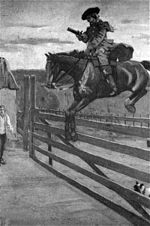
- He is also known for a fictional 200-mile (320 km) overnight ride from London to York on his horse Black Bess, a story that was made famous by the Victorian novelist William Harrison Ainsworth almost 100 years after Turpin's death. Turpin's involvement in the crime with which he is most closely associated—highway robbery—followed the arrest of the other members of his gang in 1735.
- He then disappeared from public view towards the end of that year, only to resurface in 1737 with two new accomplices, one of whom he may have accidentally shot and killed.
- Turpin fled from the scene and shortly afterwards killed a man who attempted his capture. Later that year, he moved to Yorkshire and assumed the alias of John Palmer.
- While he was staying at an inn, local magistrates became suspicious of "Palmer" and made enquiries as to how he funded his lifestyle.
- Suspected of being a horse thief, "Palmer" was imprisoned in York Castle, to be tried at the next assizes.
- Turpin's true identity was revealed by a letter he wrote to his brother-in-law from his prison cell, which fell into the hands of the authorities.
- On 22 March 1739, Turpin was found guilty on two charges of horse theft and sentenced to death; he was executed on 7 April 1739. Turpin became the subject of legend after his execution, romanticised as dashing and heroic in English ballads and popular theatre of the 18th and 19th centuries and in film and television of the 20th century.
Read more at Wikipedia