John Donne, Date of Birth, Place of Birth, Date of Death
TweetJohn Donne
English poet
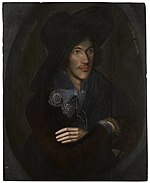

 Date of Birth: 01-Jan-0001
 Place of Birth: London
Date of Death: 31-Mar-1631
Profession: writer, lawyer, poet, politician, translator, songwriter
Zodiac Sign: Capricorn 
About John Donne
- John Donne ( DUN; 22 January 1572 – 31 March 1631) was an English poet and cleric in the Church of England. He is considered the pre-eminent representative of the metaphysical poets.
- His works are noted for their strong, sensual style and include sonnets, love poems, religious poems, Latin translations, epigrams, elegies, songs, satires and sermons.
- His poetry is noted for its vibrancy of language and inventiveness of metaphor, especially compared to that of his contemporaries.
- Donne's style is characterised by abrupt openings and various paradoxes, ironies and dislocations.
- These features, along with his frequent dramatic or everyday speech rhythms, his tense syntax and his tough eloquence, were both a reaction against the smoothness of conventional Elizabethan poetry and an adaptation into English of European baroque and mannerist techniques.
- His early career was marked by poetry that bore immense knowledge of English society and he met that knowledge with sharp criticism.
- Another important theme in Donne's poetry is the idea of true religion, something that he spent much time considering and about which he often theorized.
- He wrote secular poems as well as erotic and love poems.
- He is particularly famous for his mastery of metaphysical conceits. Despite his great education and poetic talents, Donne lived in poverty for several years, relying heavily on wealthy friends.
- He spent much of the money he inherited during and after his education on womanising, literature, pastimes, and travel.
- In 1601, Donne secretly married Anne More, with whom he had twelve children.
- In 1615 he was ordained deacon and then Anglican priest, although he did not want to take Holy Orders and only did so because the king ordered it.
- In 1621, he was appointed the Dean of St Paul's Cathedral in London.
- He also served as a member of Parliament in 1601 and in 1614.
Read more at Wikipedia
See Also
- Famous People's Birthdays on 01 January, Worldwide
- Famous People's Birthdays in January, Worldwide
- Famous writer's Birthdays on 01 January, Worldwide
- Famous writer's Birthdays in January, Worldwide
- Famous lawyer's Birthdays on 01 January, Worldwide
- Famous lawyer's Birthdays in January, Worldwide
- Famous poet's Birthdays on 01 January, Worldwide
- Famous poet's Birthdays in January, Worldwide
- Famous politician's Birthdays on 01 January, Worldwide
- Famous politician's Birthdays in January, Worldwide
- Famous translator's Birthdays on 01 January, Worldwide
- Famous translator's Birthdays in January, Worldwide
- Famous songwriter's Birthdays on 01 January, Worldwide
- Famous songwriter's Birthdays in January, Worldwide
Image Author, Source and License
Author:
Source:
License: CC-PD-Mark
PD-Art (PD-old-100)
More Details
Unknown
Source:
National Portrait Gallery: NPG 6790

|
While Commons policy accepts the use of this media, one or more third parties have made copyright claims against Wikimedia Commons in relation to the work from which this is sourced or a purely mechanical reproduction thereof. This may be due to recognition of the "sweat of the brow" doctrine, allowing works to be eligible for protection through skill and labour, and not purely by originality as is the case in the United States (where this website is hosted). These claims may or may not be valid in all jurisdictions.
As such, use of this image in the jurisdiction of the claimant or other countries may be regarded as copyright infringement. Please see Commons:When to use the PD-Art tag for more information. See User:Dcoetzee/NPG legal threat for original threat and National Portrait Gallery and Wikimedia Foundation copyright dispute for more information. This tag does not indicate the copyright status of the attached work. A normal copyright tag is still required. See Commons:Licensing. |
License: CC-PD-Mark
PD-Art (PD-old-100)
More Details