Sebastiano del Piombo, Date of Birth, Place of Birth, Date of Death
TweetSebastiano del Piombo
Italian painter (1485-1547)
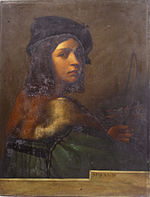

 Date of Birth: 01-Jan-1485
 Place of Birth: Venice, Venetian Province, Italy
Date of Death: 21-Jun-1547
Profession: painter
Zodiac Sign: Capricorn 
About Sebastiano del Piombo
- Sebastiano del Piombo (Italian: [seba'stja?no del 'pjombo]; c.
- 1485 – 21 June 1547) was an Italian painter of the High Renaissance and early Mannerist periods famous as the only major artist of the period to combine the colouring of the Venetian school in which he was trained with the monumental forms of the Roman school.
- He belongs both to the painting school of his native city, Venice, where he made significant contributions before he left for Rome in 1511, and that of Rome, where he stayed for the rest of his life, and whose style he thoroughly adopted.Born Sebastiano Luciani, after coming to Rome he became known as "Sebastiano Veneziano" or "Viniziano" ("Sebastian the Venetian"), until in 1531 he became the Keeper of the Seal to the Papacy, and so got the nickname del Piombo thereafter, meaning "of the lead", from his new job title of Piombatore.
- Friends like Michelangelo and Ariosto called him "Fra Bastiano".Never a very disciplined or productive painter, his artistic productivity fell still further after becoming piombatore, which committed him to attend on the pope most days, and travel with him.
- He also had to take holy orders as a friar, despite having a wife and two children.
- He now painted mostly portraits, and relatively few works of his survive compared to his great contemporaries in Rome.
- This limited his involvement with the Mannerist style of his later years. Having achieved success as a lutenist in Venice when young, he turned to painting and trained with Giovanni Bellini and Giorgione.
- When he first went to Rome he worked alongside Raphael and then became one of the few painters to get on well with Michelangelo, who tried to promote his career by encouraging him to compete for commissions against Raphael.
- He painted portraits and religious subjects in oils, and once he was established avoided the large fresco schemes that took up so much of the time of Raphael and Michelangelo.
- His earlier career in both Venice and Rome was somewhat overshadowed by the presence of clearly greater painters in the same city, but after the death of Raphael in 1520 he became Rome's leading painter.
- His influence on other artists was limited by his lack of prominent pupils, and relatively little dissemination of his works in print copies.
Read more at Wikipedia
Image Author, Source and License
Author:
Source: Bonhams
License: CC-PD-Mark
PD-Art (PD-old-100)
More Details
After Sebastiano del Piombo
(1485–1547)    |
|||
|---|---|---|---|
 |
|||
| Alternative names | Sebastiano Luciani | ||
| Description | Italian painter mannerism | ||
| Date of birth/death | circa | 15 June 1547 | |
| Location of birth/death | Venice | Rome | |
| Work location | Rome, Venice | ||
| Authority control | |||
Source: Bonhams
License: CC-PD-Mark
PD-Art (PD-old-100)
More Details