Edward Cornwallis, Date of Birth, Place of Birth, Date of Death
TweetEdward Cornwallis
British Army general
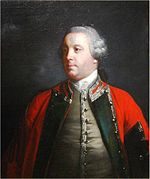

 Date of Birth: 05-Mar-1713
 Place of Birth: London
Date of Death: 14-Jan-1776
Profession: politician, military officer
Zodiac Sign: Pisces 
About Edward Cornwallis
- Lieutenant General Edward Cornwallis (5 March [O.S.
- 22 February] 1713 – 14 January 1776) was a British military officer who was a member of the aristocratic Cornwallis family.
- Cornwallis fought in Scotland, putting down the Jacobite rebellion of 1745 and then was given the task of establishing Halifax, Nova Scotia as the Governor of Nova Scotia (1749–1752).
- Cornwallis returned to London, where he was elected as MP for Westminster and married the niece of Robert Walpole, Great Britain's first Prime Minister.
- Cornwallis was then given the position of Governor of Gibraltar. Cornwallis' administration in Nova Scotia had several significant achievements.
- Cornwallis implemented the first constitution in present-day Canada, establishing both an Executive and Legislative Council.
- He oversaw the first British law courts in Canada (court of General Sessions, County Court, and Supreme Court); erected forts at Grand Pre, Chignecto and Halifax; organized a militia of 840 men; established a public school for orphans; respected religious diversity through separation of church and state.
- He also established the first Jewish community, the first German community and the first protestant dissenting congregation in present-day Canada.Cornwallis is commemorated in the naming of rivers, parks, streets, towns, and buildings in Nova Scotia.
- The commemoration of Cornwallis has become controversial in recent years.
- Local Mi'kmaq leaders objected to Governor Cornwallis' extirpation proclamation (1749).
- After protests at the site, a statue of Cornwallis in a downtown park in Halifax was removed and placed into storage.
- The Halifax Regional School Board removed his name from a junior high school.
- The Halifax city government has struck a committee to discuss how Cornwallis should be commemorated.
Read more at Wikipedia
See Also
- Famous People's Birthdays on 05 March, Worldwide
- Famous People's Birthdays in March, Worldwide
- Famous politician's Birthdays on 05 March, Worldwide
- Famous politician's Birthdays in March, Worldwide
- Famous military officer's Birthdays on 05 March, Worldwide
- Famous military officer's Birthdays in March, Worldwide
Image Author, Source and License
Author:
Source: Art Gallery of Nova Scotia
License: CC-PD-Mark
PD-Art (PD-old-100)
More Details
Joshua Reynolds
(1723–1792)     |
|||
|---|---|---|---|
 |
|||
| Alternative names | Sir Joshua Reynolds | ||
| Description | British painter | ||
| Date of birth/death | 16 July 1723 | 23 February 1792 | |
| Location of birth/death | Plympton | London | |
| Work location | London, Plympton, Italy | ||
| Authority control | |||
Source: Art Gallery of Nova Scotia
License: CC-PD-Mark
PD-Art (PD-old-100)
More Details