Cezar Papacostea, Date of Birth, Place of Birth, Date of Death
TweetCezar Papacostea
Romanian writer and translator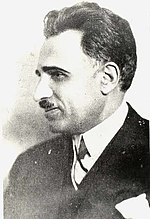

 Date of Birth:
  Place of Birth: Malovište, Bitola Municipality, North Macedonia
About Cezar Papacostea
- Cezar Papacostea (1886–July 6, 1936) was a Romanian classicist and translator. He was born in Malovišta (Molovi?te), a village in the Ottoman Empire's Manastir Vilayet that today forms part of the Republic of Macedonia's Bitola Municipality.
- His Aromanian parents were Gu?u (Papacostea-Goga) and Teofana (née Tonu), both schoolteachers.
- The family was deeply cultured, and his brothers pursued distinguished careers: Alexandru became a professor of political economy at Cernau?i University, Petre was a jurist who held important administrative offices and Victor became a historian and professor of Balkan studies at the University of Bucharest.
- After emigrating to the Romanian Old Kingdom as a child, Papacostea attended primary and high school in Braila from 1892 to 1906.
- From that point until 1910, he studied at the literature and philosophy faculty in Bucharest; Iuliu Valaori was one of his professors.After graduation, he became a professor of Latin and Greek at the central seminary in Bucharest.
- He obtained a doctorate in 1922, with a dissertation about tradition and thought in Greek literature; one of the thesis committee members was Nicolae Iorga.
- In 1923, Papacostea was hired as professor of Greek language and literature at the University of Ia?i.
- His students included Petre P.
- Negulescu, Orest Tafrali, Dionisie M.
- Pippidi and N.
- I.
- Herescu.
- He introduced the Erasmic pronunciation of Greek into the Romanian education system.In 1926, together with Valaori and Dimitrie Evolceanu, he founded Orpheus, a magazine of classical studies.
- In 1929, this merged with Favonius, a magazine founded by Herescu, resulting in Revista clasica, with Papacostea numbering among the editors.
- During Alexandru Averescu's time as Prime Minister in the 1920s, he represented Dorohoi in the Assembly of Deputies.
- At the time, he belonged to Averescu's People's Party, as did his close friend, ?tefan Zeletin.
- Shortly after the latter's death, Papacostea authored the first book-length study of his life and works.
- In 1935, he was elected a corresponding member of the Romanian Academy.
- He died the following year in Braila.His many books included Evolu?ia gândirii la greci, 1919; Diodor Sicilianul ?i opera sa, 1921; Între divin ?i uman.
- O problema a culturii elenice, 1921; Problema destinului în tragedia greaca, 1925; Filosofia antica în opera lui Eminescu, 1930; Platon.
- Via?a.
- Opera.
- Filosofia, 1931; Sofi?tii în antichitatea greaca, 1934 and ?tefan Zeletin, Via?a ?i opera lui, 1935.
- Together with Valaori and Gheorghe Popa-Lisseanu, he published editions of classical authors, including Livy, Virgil and Xenophon; grammars of Latin and Greek; verse manuals and anthologies.
- He wrote translations of Plato and Homer.
Read more at Wikipedia
See Also
- Famous People's Birthdays on 11 November, North Macedonia
- Famous People's Birthdays in November, North Macedonia
- Famous People's Birthdays on 11 November, Romania
- Famous People's Birthdays in November, Romania
- Famous writer's Birthdays on 11 November, North Macedonia
- Famous writer's Birthdays in November, North Macedonia
- Famous politician's Birthdays on 11 November, North Macedonia
- Famous politician's Birthdays in November, North Macedonia
- Famous translator's Birthdays on 11 November, North Macedonia
- Famous translator's Birthdays in November, North Macedonia
- Famous biographer's Birthdays on 11 November, North Macedonia
- Famous biographer's Birthdays in November, North Macedonia
- Famous classical scholar's Birthdays on 11 November, North Macedonia
- Famous classical scholar's Birthdays in November, North Macedonia
- Famous writer's Birthdays on 11 November, Romania
- Famous writer's Birthdays in November, Romania
- Famous politician's Birthdays on 11 November, Romania
- Famous politician's Birthdays in November, Romania