Ilie Bărbulescu (linguist), Date of Birth, Date of Death
TweetIlie Bărbulescu (linguist)
Romanian philologist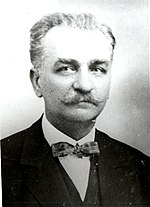

 Date of Birth:
About Ilie Bărbulescu (linguist)
- Ilie Barbulescu (December 3, 1873 – June 5, 1945) was a Romanian linguist and philologist who specialized in the Slavic languages, also noted as a political journalist and Conservative Party cadre.
- Academically trained in his native country and in the Kingdom of Croatia-Slavonia, he investigated in particular the Slavic influence on Romanian and the origins of Romanian literature, with additional interests in Old East Slavic and Russian literature.
- He was a corresponding member of the Romanian and Serbian Academies, and helped establish a Slavic studies department at the University of Ia?i.
- Barbulescu was nevertheless a controversial figure, deeply involved in academic rivalries, and taking up unpopular political stances—especially during World War I, when, contrary to his background in Slavistics, he took up "Germanophilia", rooting for the Central Powers. Published by Via?a Romîneasca and Seara, Barbulescu's political essays caused public outrage by questioning the motives of Romanian nationalists.
- He was largely silent after declared war on the Central Powers, but returned to prominence after her surrender in April 1918.
- With a Germanophile triumph apparent, he was elected dean, became editor of the newspaper Ia?iul, and served for several months as a Conservative in the Senate of Romania.
- He was demoted, and narrowly escaped being laid off, following the Armistice of November.
- Barbulescu returned to his research, for which he was rewarded with a membership in the Czech Society; he was nevertheless defeated in his bid to become a full member of the Romanian Academy, attributing this failure to political resentments and a Masonic conspiracy.
Read more at Wikipedia
See Also
- Famous People's Birthdays on 03 December, Romania
- Famous People's Birthdays in December, Romania
- Famous archivist's Birthdays on 03 December, Romania
- Famous archivist's Birthdays in December, Romania
- Famous philologist's Birthdays on 03 December, Romania
- Famous philologist's Birthdays in December, Romania
- Famous literary historian's Birthdays on 03 December, Romania
- Famous literary historian's Birthdays in December, Romania
- Famous linguist's Birthdays on 03 December, Romania
- Famous linguist's Birthdays in December, Romania