Dumitru Popovici, Date of Birth, Date of Death
TweetDumitru Popovici
Romanian literary critic (1902-1952)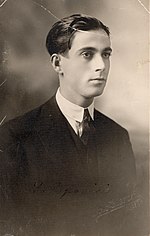

 Date of Birth:
About Dumitru Popovici
- Dumitru Popovici (October 25, 1902–December 6, 1952) was a Romanian literary historian. Born in Daneasa, Olt County, his parents were Ioan Popovici, a teacher, and his wife Ioana (née Popescu).
- After attending primary school in nearby ?erbane?ti from 1909 to 1914, he studied at Radu Greceanu High School in Slatina from 1914 to 1923.
- Popovici then went to the literature faculty of Bucharest University from 1923 to 1927, earning a doctorate there in 1935.
- From 1924 to 1926, he was honorific teaching assistant to Dumitru Caracostea.
- He taught high school in Slatina (1927-1930) and Ia?i (1930-1936).
- From 1936 until his death, he was a professor in the literature faculty of Cluj University.
- From 1930 to 1934, he audited the Modern Greek courses of André Mirambel in Paris.
- He also took classes with Daniel Mornet, Fernand Baldensperger, Paul Hazard and Mario Roques, shifting toward studies of comparative literature and working as a lecturer on the Romanian language at the Sorbonne and the École nationale des langues orientales vivantes.Popovici published his first articles of literary history in the Slatina magazine Oltul in 1928.
- His proper debut as a critic took place in 1929 in Via?a Româneasca, with the study Poezia lui Cezar Bolliac.
- He took part in founding (1935) and leading (1935-1936) Atheneum magazine in Ia?i.
- Popovici's first published book was his doctoral thesis, the 1935 Ideologia literara a lui I.
- Heliade-Radulescu; this was followed later the same year by an expanded study, "Santa Cetate".
- Între utopie ?i poezie.
- During World War II, he lived in Sibiu, having withdrawn there after the Second Vienna Award granted Northern Transylvania, including Cluj, to Hungary.
- While there in 1942, he founded Studii literare magazine, which ran until 1948.
- He also held courses on the history of literary ideology and of modern Romanian literature, published a volume of studies (Cercetari de literatura româna) and put together critical editions of the works of Dimitrie Bolintineanu (Scrieri alese, 1942) and Ion Heliade Radulescu (Opere, vol.
- I-II, 1939 and 1943).
- He made plans for a wide-ranging history of modern Romanian literature, of which he managed to publish just the first volume, La Littérature roumaine a l’époque des Lumières (1945).
- He prepared a lithographed course book, Literatura româna în epoca "Luminilor" ?i Literatura româna moderna.
- Tendin?a de integrare în ritmul cultural occidental.
- Unedited fragments of this literary history were preserved as manuscript (Romantismul românesc) or lithographed courses (Eminescu în critica ?i istoria literara româna; Poezia lui Mihai Eminescu).
- There remain in manuscript from his last years a series of literary projects and attempts: a partial translation of Dante Alighieri's Inferno; the poetry cycle Aur legendar; the opening of a novel with satirical elements, Într-o vara, la mo?ie; and numerous comedies, of which Bucatarul de la Salamandra (1946) and Regele din Propontide (1948-1950) were completed.He married Elvira Chiffa, also a professor; the couple's daughter, Ioana Em.
- Petrescu, herself became a literary historian and critic.
Read more at Wikipedia
See Also
- Famous People's Birthdays on 25 October, Romania
- Famous People's Birthdays in October, Romania
- Famous literary critic's Birthdays on 25 October, Romania
- Famous literary critic's Birthdays in October, Romania
- Famous literary historian's Birthdays on 25 October, Romania
- Famous literary historian's Birthdays in October, Romania