Edward Heath, Date of Birth, Place of Birth, Date of Death
TweetEdward Heath
Prime Minister of the United Kingdom (1970–1974)
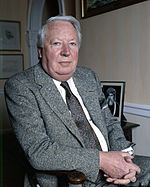

 Date of Birth: 09-Jul-1916
 Place of Birth: Broadstairs, England, United Kingdom
Date of Death: 17-Jul-2005
Profession: military personnel, politician, conductor, journalist
Nationality: United Kingdom
Zodiac Sign: Cancer 
About Edward Heath
- Sir Edward Richard George "Ted" Heath (9 July 1916 – 17 July 2005) was a British politician who served as Prime Minister of the United Kingdom from 1970 to 1974 and Leader of the Conservative Party from 1965 to 1975.
- Heath served 51 years as a Member of Parliament from 1950 to 2001.
- He was a strong supporter of the European Communities (EC), and after winning the decisive vote in the House of Commons by 336 to 244, he led the negotiations that culminated in Britain's entry into the EC on 1 January 1973.
- It was, says biographer John Campbell, "Heath's finest hour".
- Although he planned to be an innovator as Prime Minister, his government foundered on economic difficulties, including high inflation and major strikes.
- He became an embittered critic of Margaret Thatcher, who supplanted him as party leader. Heath's lower middle-class origins were quite unusual for a Conservative leader of that time.
- He was a leader in student politics at the University of Oxford and served as an officer in the Royal Artillery during the Second World War.
- He worked briefly in the Civil Service, but resigned in order to stand for Parliament, and was elected for Bexley in the 1950 general election.
- He was the Chief Whip from 1955 to 1959.
- Having entered the Cabinet as Minister of Labour in 1959, he was promoted to Lord Privy Seal and later became President of the Board of Trade.
- Heath was elected leader of the Conservative Party in 1965; he retained that position despite losing the 1966 general election. Heath became Prime Minister after winning the 1970 general election.
- In 1971 he oversaw the decimalisation of British coinage, and in 1972 he reformed Britain's system of local government, reducing the number of local authorities and creating a number of new metropolitan counties.
- Possibly most significantly, he took Britain into the European Economic Community in 1973.
- Heath's premiership also coincided with the height of the Troubles in Northern Ireland, with the suspension of the Stormont Parliament and the imposition of direct British rule.
- Unofficial talks with Provisional Irish Republican Army delegates were unsuccessful, as was the Sunningdale Agreement of 1973, which led the MPs of the Ulster Unionist Party to withdraw from the Conservative whip. Heath also tried to curb the trade unions with the Industrial Relations Act 1971, and hoped to deregulate the economy and make a transfer from direct to indirect taxation.
- Rising unemployment in 1972 led him to reflate the economy; he attempted to control the resulting high inflation by a prices and incomes policy.
- Two miners' strikes, in 1972 and at the start of 1974, damaged the government; the latter caused the implementation of the Three-Day Week to conserve energy.
- Heath eventually called an election for February 1974 to obtain a mandate to face down the miners' wage demands, but this instead resulted in a hung parliament in which the Labour Party, despite gaining fewer votes, had four more seats than the Conservatives.
- Heath resigned as Prime Minister after trying in vain to form a coalition with the Liberal Party.
- Despite losing a second general election in October that year, he vowed to continue as party leader.
- In February 1975, Margaret Thatcher challenged and defeated him to win the leadership. Returning to the backbenches, Heath was openly critical of Thatcherism.
- He remained a backbench MP until retiring at the 2001 election, serving as the Father of the House for his last nine years in Parliament.
- Outside politics, Heath was a world-class yachtsman and a talented musician.
- He died in 2005, aged 89.
- He is one of four British prime ministers never to have married.
Read more at Wikipedia
See Also
- Famous People's Birthdays on 09 July, United Kingdom
- Famous People's Birthdays in July, United Kingdom
- Famous military personnel's Birthdays on 09 July, United Kingdom
- Famous military personnel's Birthdays in July, United Kingdom
- Famous politician's Birthdays on 09 July, United Kingdom
- Famous politician's Birthdays in July, United Kingdom
- Famous conductor's Birthdays on 09 July, United Kingdom
- Famous conductor's Birthdays in July, United Kingdom
- Famous journalist's Birthdays on 09 July, United Kingdom
- Famous journalist's Birthdays in July, United Kingdom