George Thomas Smart, Date of Birth, Place of Birth, Date of Death
TweetGeorge Thomas Smart
English musician
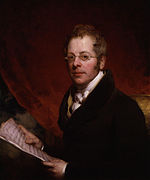

 Date of Birth: 10-May-1776
 Place of Birth: London
Date of Death: 23-Feb-1867
Profession: composer, conductor
Zodiac Sign: Taurus 
About George Thomas Smart
- Sir George Thomas Smart (10 May 1776 – 23 February 1867) was an English musician. Smart was born in London, his father being a music-seller.
- He was a choir-boy at the Chapel Royal, and was educated in music, becoming an expert violinist, organist, teacher of singing and conductor.
- He taught for many years at the Royal Academy of Music where his notable pupils included Elizabeth Greenfield, John Orlando Parry, Mary Shaw, and Willoughby Weiss.
- In 1811 he was knighted by the Lord Lieutenant of Ireland, having conducted a number of successful concerts in Dublin.
- On 1 April 1822 he was appointed organist at the Chapel Royal. Sir George Smart was, from that time onwards, one of the chief musical leaders and organizers in England, conducting at the Royal Philharmonic Society, Covent Garden, the provincial festivals, etc., and in 1838 being appointed composer to the Chapel Royal.
- He was a master of the Handelian traditions, was personally acquainted with Beethoven and a close friend of Weber, who died in his house.
- Some of his church music and glees became well-known.
- He died in London, and is buried there at Kensal Green Cemetery.His brother Henry (1778–1823), father of the composer Henry Smart, was a well-known violinist. Smart wrote a journal, Leaves from the Journals of Sir George Smart, that was published in 1907.
Read more at Wikipedia
Image Author, Source and License
Author:
Source:
License: CC-PD-Mark
PD-Art (PD-old-100)
More Details
William Bradley (died 1857)
Source:
National Portrait Gallery: NPG 1326

|
While Commons policy accepts the use of this media, one or more third parties have made copyright claims against Wikimedia Commons in relation to the work from which this is sourced or a purely mechanical reproduction thereof. This may be due to recognition of the "sweat of the brow" doctrine, allowing works to be eligible for protection through skill and labour, and not purely by originality as is the case in the United States (where this website is hosted). These claims may or may not be valid in all jurisdictions.
As such, use of this image in the jurisdiction of the claimant or other countries may be regarded as copyright infringement. Please see Commons:When to use the PD-Art tag for more information. See User:Dcoetzee/NPG legal threat for original threat and National Portrait Gallery and Wikimedia Foundation copyright dispute for more information. This tag does not indicate the copyright status of the attached work. A normal copyright tag is still required. See Commons:Licensing. |
License: CC-PD-Mark
PD-Art (PD-old-100)
More Details