Niccolò Machiavelli, Date of Birth, Place of Birth, Date of Death
TweetNiccolò Machiavelli
Italian politician, writer and author
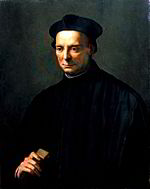

 Date of Birth: 03-May-1469
 Place of Birth: Florence, Tuscany
Date of Death: 21-Jun-1527
Profession: writer, poet, politician, diplomat, historian, translator, philosopher, military theorist, political theorist
Zodiac Sign: Taurus 
About Niccolò Machiavelli
- Niccolò di Bernardo dei Machiavelli (, also US: ; Italian: [nikko'l? mmakja'v?lli]; 3 May 1469 – 21 June 1527) was an Italian diplomat, politician, historian, philosopher, writer, playwright and poet of the Renaissance period.
- He has often been called the father of modern political philosophy and political science.
- For many years he served as a senior official in the Florentine Republic with responsibilities in diplomatic and military affairs.
- He wrote comedies, carnival songs, and poetry.
- His personal correspondence is of high importance to historians and scholars.
- He worked as secretary to the Second Chancery of the Republic of Florence from 1498 to 1512, when the Medici were out of power.
- He wrote his best-known work The Prince (Il Principe) in 1513, having been exiled from city affairs. The word Machiavellian is widely used as a pejorative to characterize unscrupulous politicians of the sort Machiavelli advised most famously in The Prince.
- Machiavelli proposed that immoral behavior, such as dishonesty and the killing of innocents, was normal and effective in politics.
- He also notably encouraged politicians to engage in evil when it would be necessary for political expediency.
- The book gained notoriety due to claims that it teaches "evil recommendations to tyrants to help them maintain their power".The term Machiavellian often connotes political deceit, deviousness, and realpolitik.
- Even though Machiavelli has become most famous for his work on principalities, scholars also give attention to the exhortations in his other works of political philosophy.
- His much less popular treatise, the Discourses on Livy, is often said to have paved the way of modern republicanism.
Read more at Wikipedia
See Also
- Famous People's Birthdays on 03 May, Worldwide
- Famous People's Birthdays in May, Worldwide
- Famous writer's Birthdays on 03 May, Worldwide
- Famous writer's Birthdays in May, Worldwide
- Famous poet's Birthdays on 03 May, Worldwide
- Famous poet's Birthdays in May, Worldwide
- Famous politician's Birthdays on 03 May, Worldwide
- Famous politician's Birthdays in May, Worldwide
- Famous diplomat's Birthdays on 03 May, Worldwide
- Famous diplomat's Birthdays in May, Worldwide
- Famous historian's Birthdays on 03 May, Worldwide
- Famous historian's Birthdays in May, Worldwide
- Famous translator's Birthdays on 03 May, Worldwide
- Famous translator's Birthdays in May, Worldwide
- Famous philosopher's Birthdays on 03 May, Worldwide
- Famous philosopher's Birthdays in May, Worldwide
- Famous military theorist's Birthdays on 03 May, Worldwide
- Famous military theorist's Birthdays in May, Worldwide
Image Author, Source and License
Author:
Source: http://altomani.com/paintings/page1450.htm
License: CC-PD-Mark
PD-Art (PD-old-100)
More Details
Ridolfo del Ghirlandaio
(1483–1561)   |
|||
|---|---|---|---|
 |
|||
| Alternative names | Ridolfo Bigordi | ||
| Description | Italian painter son of Domenico Ghirlandaio | ||
| Date of birth/death | 14 February 1483 | 6 June 1561 | |
| Location of birth/death | Florence | Florence | |
| Work period | Renaissance | ||
| Work location | Florence | ||
| Authority control | |||
Source: http://altomani.com/paintings/page1450.htm
License: CC-PD-Mark
PD-Art (PD-old-100)
More Details