James P. Hagerstrom, Date of Birth, Place of Birth, Date of Death
TweetJames P. Hagerstrom
U.S. Air Force flying ace
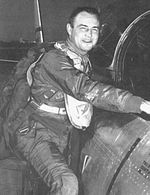

 Date of Birth: 14-Jan-1921
 Place of Birth: Cedar Falls, Iowa, United States
Date of Death: 25-Jul-1994
Profession: lawyer, fighter pilot
Nationality: United States
Zodiac Sign: Capricorn 
About James P. Hagerstrom
- Colonel James Philo Hagerstrom (January 14, 1921 – June 25, 1994) was a fighter ace of both the United States Army Air Forces (USAAF) in World War II and the U.S.
- Air Force (USAF) in the Korean War.
- With a career total of 14.5 victories, he is one of seven American pilots to have achieved ace status in two different wars. Born in Cedar Falls, Iowa, Hagerstrom became interested in flying at a young age.
- He left college in 1941 to join the USAAF, and was posted to fight in the New Guinea campaign of the South West Pacific theater of World War II.
- There, he mainly escorted bombers with his P-40 Warhawk.
- He shot down six Japanese aircraft over the course of the war, including four in one morning.
- After the war, he continued flying, joining the Texas Air National Guard and participating in several air races.
- By 1950 he was in command of the 111th Fighter-Bomber Squadron, which was deployed to Korea following the outbreak of the Korean War.
- He later transferred to the USAF and flew in "MiG Alley", the nickname given to the area around the northern border of North Korea with China.
- He flew an F-86 Sabre jet, destroying 8.5 Chinese, Soviet, and North Korean MiG-15s. Hagerstrom returned to the U.S.
- in 1953 and remained in the Air Force, also earning degrees in economics and law.
- In 1965, he served several command roles during the Vietnam War while flying 30 combat missions.
- After retiring in 1968, he traveled around the Pacific Ocean in a homemade boat with his family, living on various islands before returning to the U.S.
- and settling in Mansfield, Louisiana.
- Hagerstrom died in nearby Shreveport of stomach cancer in 1994.
Read more at Wikipedia
See Also
- Famous People's Birthdays on 14 January, United States
- Famous People's Birthdays in January, United States
- Famous lawyer's Birthdays on 14 January, United States
- Famous lawyer's Birthdays in January, United States
- Famous fighter pilot's Birthdays on 14 January, United States
- Famous fighter pilot's Birthdays in January, United States