Joshua Routledge, Date of Birth, Place of Birth, Date of Death
TweetJoshua Routledge
British inventor
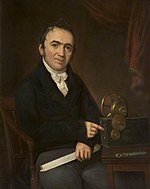

 Date of Birth: 27-Apr-1773
 Place of Birth: Riccall, England, United Kingdom
Date of Death: 08-Feb-1829
Profession: inventor
Zodiac Sign: Taurus 
About Joshua Routledge
- Joshua Routledge (27 April 1773 – 8 February 1829) was an engineer and inventor of the late 18th and early 19th century during the Industrial Revolution. Mechanical engineering as a profession was on the rise and the advent of the steam age opened up viable career alternatives for many young Englishmen who, like Joshua Routledge, grew up in an agriculture-based society. Born on 27 April 1773 and baptised on the 29th in Riccall, Yorkshire.
- Joshua Routledge was third of ten children.
- Generations of Routledges were established as yeoman farmers and weavers in Riccall, a village about 9 miles (14 km) south of the city of York.
- Sometime before 1778, Joshua's parents, William (1744–1822) and Sarah Bell (1745–1819), moved the family a short distance to Elvington, 7 miles (11 km) southeast of York. Apart from a few details, little is known of their time in Elvington.
- Joshua's father was a blacksmith by trade, but he seems to have been pious by nature.
- The Industrial Revolution allowed the advancement of all sorts of radical new ideas in tandem with mechanical innovations.
- Religious, political, and social reformers took to the highways and byways spreading discontent with the status quo, John Wesley being one religious reformer whose message took hold in Yorkshire.
- His brand of fervent evangelical Methodism encouraged lay preachers, which appealed very much to the working classes.
- Evidently, the Routledges of Elvington, including Joshua, were receptive to Wesley's teachings.
- They joined the movement as active members of the York Circuit, and according to an account by J.
- D.
- Greenhalgh published in 1882, William Routledge was among a list of "Wesleyan Methodist ministers admitted...in the year 1800."
Read more at Wikipedia