
 Date of Birth:
  Place of Birth: Bangkok, Thailand
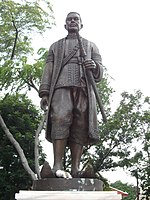
About Sakdiphonlasep
- Somdet Phra Bawonratchao Maha Sakdiphonlasep (Thai: ????????????????????????????????; October 21, 1785 – May 1, 1832) was the viceroy appointed by Nangklao as the titular heir to the throne as he was the uncle to the king.
- Prince Arunotai was the son of King Buddha Loetla Nabhalai and his concubine Nuiyai.
- He was later appointed the Kromma Muen Sakdiphonlasep and became acquitted with his half-nephew Kromma Muen Chetsadabodin during the wars with Burma.
- Kromma Muen Chetsadabodin was crowned as King Nangklao (Rama III) in 1824 and, consequently, Sakdiphonlasep was made the "Second King".
- He led the Siamese armies into Isan to fight with King Anouvong of Vientiane in 1826. Sakdiphonlasep ordered the construction of the Bowonniwet Temple (lit.
- temple where the Front Palace lived) - the seat of the Sangharaja today and where Prince Mongkut (future Rama IV) became an abbot.
- In 1829, he ordered the Buddha Chinnasri - a 900-year-old Sukhothai Buddha statue from Pitsanulok - to be floated along the river and placed at the Bowonniwet Temple. His funeral procession was held 2 April 1833, with cremation set for seven days later.
- The king, through the Phraklang, invited US diplomat Edmund Roberts and party to witness the procession, which Roberts describes in journal.
- Roberts notes that one of the sons of the wang-na watches at the temple, near the funeral pile, night and day, till the body is consumed; the ashes of the consumed body are then thrown into the river with many ceremonies; and the unconsumed bones are then delivered to the priests, and made into household gods [sic].
- (Roberts refers to Buddhist monks as "Talapoy," from Portuguese talapão from Burmese tala poi our lord.)
Read more at Wikipedia