Uma Chakravarti, Date of Birth, Place of Birth
TweetUma Chakravarti
Feminist Historian, Feminist activist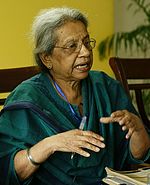

 Date of Birth:
  Place of Birth: Delhi, India
About Uma Chakravarti
- Uma Chakravarti is an Indian historian and filmmaker.
- Beginning in the 1980s, Chakravarti wrote extensively on Indian history indulging with issues relating to gender, caste, and class, publishing seven books over the course of her career.
- Her body of work mostly focused on the history of Buddhism, and that of ancient and 19th century India. Born to a bureaucrat from Palghat, Kerala, Chakravarti went to school in Delhi and Bangalore.
- She completed her master's in history from the Benaras Hindu University and ventured into teaching.
- Chakravarti established a career as an educator at the Miranda House, University of Delhi, where she taught from 1966 to 1998.
- She published her first book—Social Dimensions of Early Buddhism as a part of her doctorate study in 1987.
- Her subsequent writings, the most successful of which are Rewriting History: The Life and Times of Pandita Ramabai (1998) and Gendering Caste through a Feminist Lens (2002), have been well received by both the audience and fellow academicians. A leading scholar of women's and feminist history writing in subcontinent, she has been called the founding mother of the women's movement in India.
- Apart from engaging with feminist issues, she has also worked as a democratic rights activist, participating in several fact-finding committees including the International Tribunal on Justice for Gujarat.
- She also writes newspaper columns on contemporary issues concerning women and human rights. Chakravarti has also directed two documentary films—A Quiet Little Entry and Fragments of a Past, both of which focus on, among other issues, women's history in India.
Read more at Wikipedia