James Hutton, Date of Birth, Place of Birth, Date of Death
TweetJames Hutton
Scottish geologist and physician
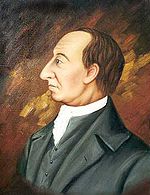

 Date of Birth: 03-Jun-1726
 Place of Birth: Edinburgh, Scotland, United Kingdom
Date of Death: 26-Mar-1797
Profession: farmer, geologist, meteorologist, industrialist
Zodiac Sign: Gemini 
About James Hutton
- James Hutton ( ; 3 June 1726 – 26 March 1797) was a Scottish geologist, physician, chemical manufacturer, naturalist, and experimental agriculturalist.
- He contributed to what was later called uniformitarianism—a fundamental principle of geology—that explains the features of the Earth's crust by means of natural processes over geologic time.
- Hutton's work helped to establish geology as a science, and as a result he is often referred to as the "Father of Modern Geology", though these principles were already in use by others including Buffon.Through observation and carefully reasoned geological arguments, Hutton came to believe that the Earth was perpetually being formed; he recognised that the history of Earth could be determined by understanding how processes such as erosion and sedimentation work in the present day.
- His theories of geology helped to establish geologic time, also called deep time, but unlike modern concepts, Hutton's "system of the habitable Earth" was a deistic mechanism to keep the world eternally suitable for humans.
Read more at Wikipedia
See Also
- Famous People's Birthdays on 03 June, United Kingdom
- Famous People's Birthdays in June, United Kingdom
- Famous farmer's Birthdays on 03 June, United Kingdom
- Famous farmer's Birthdays in June, United Kingdom
- Famous geologist's Birthdays on 03 June, United Kingdom
- Famous geologist's Birthdays in June, United Kingdom
- Famous meteorologist's Birthdays on 03 June, United Kingdom
- Famous meteorologist's Birthdays in June, United Kingdom
- Famous industrialist's Birthdays on 03 June, United Kingdom
- Famous industrialist's Birthdays in June, United Kingdom