Sirimavo Bandaranaike, Date of Birth, Place of Birth, Date of Death
TweetSirimavo Bandaranaike
Sri Lankan politician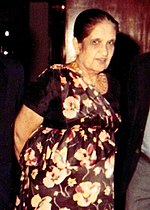

 Date of Birth:
  Place of Birth: Balangoda, Sabaragamuwa Province, Sri Lanka
About Sirimavo Bandaranaike
- Sirima Ratwatte Dias Bandaranaike (Sinhala: ?????? ???????? ???? ??????????, Tamil: ?????? ???????? ???? ?????????????; 17 April 1916 – 10 October 2000), commonly known as Sirimavo Bandaranaike, was a Sri Lankan stateswoman.
- She became the world's first non-hereditary female head of government in modern history, when she was elected Prime Minister of Sri Lanka in 1960.
- She served three terms: 1960–1965, 1970–1977 and 1994–2000. Born into an aristocratic Kandyan family, Bandaranaike was educated in Catholic, English-medium schools, but remained a Buddhist and spoke Sinhala as well as English.
- On graduating from secondary school, she worked for various social programmes before marrying and raising a family.
- Playing hostess to her husband S.
- W.
- R.
- D.
- Bandaranaike, who was involved in politics and later became Prime Minister, she gained his trust as an informal advisor.
- Her social work focused on improving the lives of women and girls in rural areas of Sri Lanka.
- Following her husband's assassination in 1959, Sirimavo Bandaranaike entered politics and in 1960 became the first woman elected Prime Minister of a country. Bandaranaike attempted to reform the former British Colony of Ceylon into a socialist republic by nationalising organisations in the banking, education, industry, media and trade sectors.
- Changing the administrative language from English to Sinhala, she exacerbated discontent among the native Tamil population, and with the estate Tamils, who had become stateless under the Citizenship Act of 1948.
- During Bandaranaike's first two terms as Prime Minister, the country was plagued by high inflation and taxes, a dependence on food imports to feed the populace, high unemployment, and polarisation between the Sinhalese and Tamil populations because of her Sinhalese nationalist policies.
- Surviving an attempted coup d'état in 1962, as well as a 1971 insurrection of radical youths, in 1972 she oversaw the drafting of a new constitution and the formation of the Sri Lankan republic.
- In 1975, Bandaranaike created what would eventually become the Sri Lankan Ministry of Women and Child Affairs, also appointing the first woman to serve in the Sri Lankan Cabinet.
- Bandaranaike's tenure was marked by inadequate economic development at the national level.
- She played a large role abroad as a negotiator and a leader among the Non-Aligned Nations. Ousted from power in the 1977 elections, Bandaranaike was stripped of her civil rights in 1980 for abuses of power during her tenure and barred from government for seven years.
- Her successors initially improved the domestic economy, but failed to address social issues, and led the country into a protracted civil war.
- When she returned to party leadership in 1986, Bandaranaike opposed allowing the Indian Peace Keeping Force to intervene in the civil war, believing it violated Sri Lankan sovereignty.
- Failing to win the office of President in 1988, she served as Leader of the Opposition in the legislature from 1989 to 1994.
- When her daughter won the presidential election that year, Bandaranaike was appointed to her third term as Prime Minister and served until her retirement in 2000, two months prior to her death.
Read more at Wikipedia