Ralph James Wickel, Date of Birth, Place of Birth, Date of Death
TweetRalph James Wickel
American tennis player
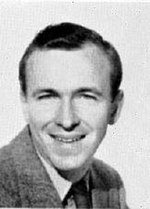

 Date of Birth: 28-Nov-1921
 Place of Birth: Lansdale, Pennsylvania, United States
Date of Death: 01-Jan-0001
Profession: tennis player
Nationality: United States
Zodiac Sign: Sagittarius 
About Ralph James Wickel
- Ralph J.
- Wickel was born on November 28, 1921 and was raised in Lansdale, Pennsylvania.
- The family home was located on N.
- Towamencin Avenue in the town of Lansdale.
- The Wickel family were members of the Church of the Holy Trinity, North Broad Street.
- Wickel was educated in the Lansdale public school system and graduated from Lansdale High School. Wickel participated in the Lansdale High School marching band.
- As tennis was not a varsity sport at Lansdale High School in the late 1930s, Wickel had to develop his skills on local tennis courts.
- The Pool and Sons Pants Factory, Second Street & Towamencin Avenue, Lansdale, maintained a tennis court.
- The Pool and Sons Pants Factory owner and operator, Irwin H.
- Pool, took notice of Ralph's tennis ability and mentored his development.
- Wickel participated in local amateur tennis tournaments and played at various private clubs in the Lansdale area.
- Wickel garnered the attention of Temple University (Philadelphia, PA) and was awarded a scholarship to participate on the varsity tennis team.During the time Wickel was attending Temple University, the United States entered into World War II.
- Wickel enlisted in the United States Army in October 1942.
- Mustered into active service in May 1943, Wickel was stationed at Fort George G.
- Meade, Maryland.
- Completing basic training and qualifying as a M1 rifle marksman, Ralph's occupational specialty was to be a radio operator with the 3132nd Sonic CompanyThe 3132nd Sonic Company was composed of US Army soldiers participating in a classified unit named the 23rd Headquarters Special Troops.
- The Special Troop's mission involved tactical deception activities in the European theatre of World War II.
- The 23rd Headquarters Special Troops were composed of the 603rd Engineer Battalion, 406th Combat Engineer, and the 3132nd Sonic Company; better known in history as the Ghost Army.
- The special troops were composed of artists, designers, actors, meteorologists, sound technicians, and their true mission was not to fight, but to deceive the German army.
- Their props were inflatable tanks and pyrotechnics; their tools camouflage, "spoof" radio plays, special effects, and sonic deceptionWickel departed with his company for the European theatre in May 1944.
- During his service, Wickel was involved in the battles of Northern France, Ardennes, Central Europe and the Rhineland.
- The 23rd Headquarters Special Troops military activities were highly classified during the war and the mission details were only recently declassified in 1996.
- Wickel earned the military position of Technician Fifth Grade (T/5).
- Receiving an honorable discharge from the United States Army, Wickel returned to civilian life in November 1945Wickel returned to Temple University to compete on the varsity tennis team and earn a bachelor's degree.
- Upon graduation, Wickel and his wife, Georgine, continued to reside in the Philadelphia area.
- Wickel chose a career in education and the Wickel family expanded with the birth of their daughter, Kathleen. As a member of the Middle States Lawn Tennis Association, a division of the United States Lawn Tennis Association (USLTA), Wickel competed successfully in amateur regional tennis tournaments.
- Wickel reached divisional rankings of 9th in single's (1954) and 1st in double's (1954 & 1955).
- Wickel competing in the USLTA men's singles United States National Championships; known currently as the United States Open Tennis Championships.
- Wickel competed in Round 1 of the tournament in 1952, 1954 and 1955.Wickel changed careers joining the Holt, Rinehart and Winston Publishing Co.
- until his retirement in 1981.
- Retirement brought a change of residence to Vero Beach, Florida.
- Wickel and his wife Georgine were avid antique automobile collector, and were members of National Antique Automobile Club and the Indian River County Studebaker Club. Wickel died on April 26, 2001 in Vero Beach, Florida.
Read more at Wikipedia