Mary van Kleeck, Date of Birth, Place of Birth, Date of Death
TweetMary van Kleeck
American social reformer and social worker
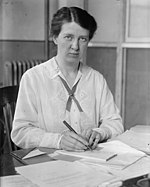

 Date of Birth: 26-Jun-1883
 Place of Birth: Glenham, New York, United States
Date of Death: 08-Jun-1972
Profession: sociologist, social worker
Zodiac Sign: Cancer 
About Mary van Kleeck
- Mary Abby van Kleeck (June 26, 1883 – June 8, 1972) was an American social feminist, labor activist, and social scientist of the 20th century.
- She was a notable figure in the American labor movement as well as a proponent of scientific management and a planned economy.
- Of Dutch origin, Van Kleeck was a lifelong New Yorker, with the exception of her undergraduate studies at Smith College.
- She began her career investigating women's labor in New York City as part of the settlement movement.
- Van Kleeck rose to prominence as director of the Russell Sage Foundation's Department of Industrial Studies, which she led for over 30 years, beginning in 1916. During World War I, van Kleeck was appointed by President Wilson to lead the development of workplace standards for women entering the workforce, becoming the first woman appointed to a position of authority in the American federal government.
- After the war, she helped to create a federal agency to advocate for women in the workforce (the Women's Bureau), before returning to the Sage Foundation.
- Van Kleeck's experiences with and research into capitalism led her to become a passionate socialist.
- During the Great Depression, she became a prominent left-wing critic of the New Deal and U.S.
- capitalism, advocating a radical agenda for social workers and laborers. Retiring from the Sage Foundation in 1948, van Kleeck ran for New York State Senate as a member of the far-left American Labor Party, but lost the election and turned her focus to peace activism and nuclear disarmament.
- As a long-time advocate of planned economies, she became a supporter of Soviet-American friendship, leading to suspicion from the powerful anti-communist movement.
- She died at the age of 88 in 1972.
Read more at Wikipedia
See Also
- Famous People's Birthdays on 26 June, United States
- Famous People's Birthdays in June, United States
- Famous sociologist's Birthdays on 26 June, United States
- Famous sociologist's Birthdays in June, United States
- Famous social worker's Birthdays on 26 June, United States
- Famous social worker's Birthdays in June, United States