William Bell Scott, Date of Birth, Place of Birth, Date of Death
TweetWilliam Bell Scott
British artist
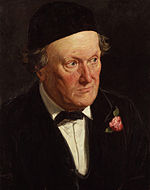

 Date of Birth: 12-Sep-1811
 Place of Birth: Edinburgh, Scotland, United Kingdom
Date of Death: 22-Nov-1890
Profession: writer, poet, painter
Zodiac Sign: Virgo 
About William Bell Scott
- William Bell Scott (1811–1890) was a Scottish artist in oils and watercolour and occasionally printmaking.
- He was also a poet and art teacher, and his posthumously published reminiscences give a chatty and often vivid picture of life in the circle of the Pre-Raphaelites; he was especially close to Dante Gabriel Rossetti.
- After growing up in Edinburgh, he moved to London, and from 1843 to 1864 was principal of the government School of Art in Newcastle upon Tyne, where he added industrial subjects to his repertoire of landscapes and history painting.
- He was one of the first British artists to extensively depict the processes of the Industrial Revolution.
- He returned to London, working for the Science and Art Department until 1885.He painted a cycle of historical subjects mixed with scenes from modern industry for Wallington Hall in Northumberland (now National Trust), his best known works, and a purely historical cycle for Penkill Castle in Ayrshire in Scotland.
- He did not paint many portraits, but his striking portrait of his friend Algernon Charles Swinburne is the iconic image of the poet.
- His etchings were mostly designed to illustrate his books.
Read more at Wikipedia
See Also
- Famous People's Birthdays on 12 September, United Kingdom
- Famous People's Birthdays in September, United Kingdom
- Famous writer's Birthdays on 12 September, United Kingdom
- Famous writer's Birthdays in September, United Kingdom
- Famous poet's Birthdays on 12 September, United Kingdom
- Famous poet's Birthdays in September, United Kingdom
- Famous painter's Birthdays on 12 September, United Kingdom
- Famous painter's Birthdays in September, United Kingdom
Image Author, Source and License
Author:
Source:
License: CC-PD-Mark
PD-Art (PD-old-100)
More Details
Frederick Bacon Barwell (floruit 1855-1897)
Source:
National Portrait Gallery: NPG 6105

|
While Commons policy accepts the use of this media, one or more third parties have made copyright claims against Wikimedia Commons in relation to the work from which this is sourced or a purely mechanical reproduction thereof. This may be due to recognition of the "sweat of the brow" doctrine, allowing works to be eligible for protection through skill and labour, and not purely by originality as is the case in the United States (where this website is hosted). These claims may or may not be valid in all jurisdictions.
As such, use of this image in the jurisdiction of the claimant or other countries may be regarded as copyright infringement. Please see Commons:When to use the PD-Art tag for more information. See User:Dcoetzee/NPG legal threat for original threat and National Portrait Gallery and Wikimedia Foundation copyright dispute for more information. This tag does not indicate the copyright status of the attached work. A normal copyright tag is still required. See Commons:Licensing. |
License: CC-PD-Mark
PD-Art (PD-old-100)
More Details