
 Date of Birth:
About Walter Whitehead
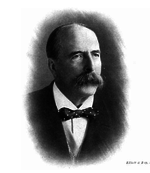
- Walter Whitehead, FRCSE, FRSE, (12 October 1840 – 19 August 1913) was a surgeon at various hospitals in Manchester, England, and held the chair of Clinical Surgery at the Victoria University of Manchester.
- He was president of the British Medical Association in 1902.
- He once claimed that knowledge of anatomy was an impediment to being a good surgeon but was himself a bold, innovative practitioner of international repute.
- His procedure for excision of the tongue using scissors and his formulation of a related ointment became a standard treatment, as did a procedure he developed for the treatment of haemorrhoids. Whitehead was born to a family with a long-standing interest in textile manufacture in Bury, Lancashire.
- His interest in medicine was piqued when he attended lectures intended to improve his knowledge of the chemical processes of bleaching cloth.
- He enrolled at the Manchester Royal School of Medicine without telling his parents and thus embarked on his medical career.
- He began as a general practitioner and gained experience caring for workhouse inmates, including while working for a time in Mansfield Woodhouse, Nottinghamshire.
- In 1867 he returned to Manchester to begin his career as a surgeon. Several Mancunian hospitals appointed Whitehead to various surgical positions during his career, sometimes concurrently.
- Of those, it was the Manchester Royal Infirmary, which he joined in 1873, with which he was associated for the longest time.
- His association with the university in Manchester began in 1884 and eventually included governing roles as well as his professorial chair.
- His career also included acting as an expert witness in court cases, as a co-publisher of a medical magazine and as a member of various committees and a hospital reform organisation.
- He also held various posts as an officer of the Royal Army Medical Corps and related military units. A clock tower commemorating Whitehead was erected in Bury after his death in 1913.
Read more at Wikipedia