
 Date of Birth:
  Place of Birth: Paris, Île-de-France, France
About Pierre Potain
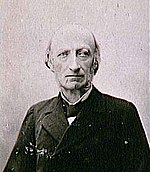
- Pierre Charles Édouard Potain (19 July 1825 – 5 January 1901) was a French cardiologist born in Paris. In 1853 he earned his doctorate from the University of Paris, and later worked as an assistant to Jules Baillarger (1809-1890) at the mental asylum in Ivry-sur-Seine.
- In 1856 he began work in the clinic of Jean-Baptiste Bouillaud (1796-1881), whom Potain regarded as a major influence to his career.
- Afterwards, he worked in various hospitals in Paris, including the Hôpital Saint-Antoine and Hôpital Necker.
- In 1861 he was appointed médecin des hôpitaux and an associate professor to the Paris medical faculty.
- In 1876 he attained the chair of pathology, and soon afterwards served as chair of clinical medicine.
- From 1882 to 1900 he was associated with the Hôpital de la Charité.
- Potain made several contributions in his research of cardiovascular disease, and conducted various tests in the field of cardiology.
- These tests included analysis of jugular venous waves, heart gallop rhythm research, blood pressure testing and auscultatory analysis.
- In 1889 he was credited for making modifications to the sphygmomanometer, a device used to measure blood pressure that had been recently invented by Samuel Siegfried Carl von Basch (1837-1905).
- He also designed a pleural suction apparatus and made improvements to the Malassez hemocytometer. The term "Potain's sign" is an extension of percussion dullness over the aortic arch from the manubrium to the third costal cartilage on the right-hand side of the body.
- Potain's name is associated with several other eponymous medical terms; the following terms are seldom used today and are for historical purposes only. "Potain's disease": pulmonary edema "Potain's solution": diluent used in a procedure to count red blood cells "Potain's syndrome": dyspepsia with expansion of the right ventricle, and an increase of pulmonary auscultation.He was a member of the Académie de Médecine (1883), the Académie des Sciences (1893) and a commander of the Légion d'honneur (1895).
- In the 19th arrondissement of Paris, there is a street named Rue du Docteur Potain.
Read more at Wikipedia
See Also
- Famous People's Birthdays on 19 July, France
- Famous People's Birthdays in July, France
- Famous university teacher's Birthdays on 19 July, France
- Famous university teacher's Birthdays in July, France
- Famous cardiologist's Birthdays on 19 July, France
- Famous cardiologist's Birthdays in July, France
- Famous internist's Birthdays on 19 July, France
- Famous internist's Birthdays in July, France