Constantin Isopescu-Grecul, Date of Birth, Place of Birth, Date of Death
TweetConstantin Isopescu-Grecul
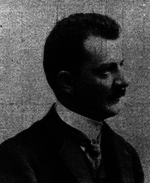

 Date of Birth: 02-Feb-1871
 Place of Birth: Chernivtsi, Chernivtsi Oblast, Ukraine
Date of Death: 29-Mar-1938
Profession: judge, poet, politician, diplomat, academic
Zodiac Sign: Aquarius 
About Constantin Isopescu-Grecul
- Constantin Ritter von Isopescu-Grecul (or cavaler de Isopescu-Grecul; first name also Konstantin, last name also Isopescul-Grecul, Isopescu Grecu; Ukrainian: ?????????? ??????????-???????; 1871–1938) was an Austro-Hungarian-born Romanian jurist, politician, and journalist.
- He represented the region of Bukovina and a Romanian constituency in the Austrian House of Deputies continuously from 1907, participating in the political events of World War I.
- He was foremost known as a legal reformer and a political moderate, who objected to radical forms of Romanian nationalism and mainly sought to obtain a special status for the Romanians within a reformed Austria.
- His loyalism was rewarded by the Austrian authorities and antagonized the Romanian National People's Party, but Isopescu-Grecul also took distance from the pro-Austrian line advocated by Aurel Onciul.
- In 1908, Isopescu-Grecul joined Nicu Flondor and Teofil Simionovici in creating an Independent Party, which espoused a moderate program.
- He later rallied behind Iancu Flondor, embracing his conservative approach to national issues. He was drawn closer to nationalism during the world war.
- He denounced the persecution of Romanians in Transylvania, and was disappointed by Austria's offer to merge Bukovina into a Ukrainian People's Republic.
- In late 1918, he still contemplated autonomy or independence for Bukovina and Transylvania, rather than union with the Kingdom of Romania, promoting Wilsonianism.
- When public order broke down in Vienna, he and Iuliu Maniu organized defense units of Romanians from the Common Army, which doubled as a police force.
- The process of union between Bukovina–Transylvania and Romania having been initiated, Isopescu-Grecul accepted the outcome.
- He continued to serve as Romanian envoy in Vienna and Prague for most of the Hungarian–Romanian War, when he favored forging a long-lasting alliance between Romania and the Hungarian conservative forces. In 1920, Isopescu-Grecul made his way back to Bukovina, an adviser of the Romanian governments and an investor in forestry businesses.
- He made a return to politics eight years later, when he joined Maniu's National Peasants' Party and served briefly in the Chamber of Deputies.
- In 1930–1933, he held the office of rector of Czernowitz University, an institution which he also represented in the Senate of Romania.
Read more at Wikipedia
See Also
- Famous People's Birthdays on 02 February, Ukraine
- Famous People's Birthdays in February, Ukraine
- Famous judge's Birthdays on 02 February, Ukraine
- Famous judge's Birthdays in February, Ukraine
- Famous poet's Birthdays on 02 February, Ukraine
- Famous poet's Birthdays in February, Ukraine
- Famous politician's Birthdays on 02 February, Ukraine
- Famous politician's Birthdays in February, Ukraine
- Famous diplomat's Birthdays on 02 February, Ukraine
- Famous diplomat's Birthdays in February, Ukraine
- Famous academic's Birthdays on 02 February, Ukraine
- Famous academic's Birthdays in February, Ukraine