
 Date of Birth:
  Place of Birth: Bari, Apulia, Italy
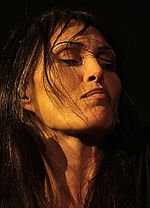
About Anna Oxa
- Anna Hoxha (Albanian: ['ana 'h?d?a]; born 28 April 1961), known professionally as Anna Oxa (Italian: ['anna '?ksa]), is an Italian singer, actress, and television presenter.
- Affectionately referred to as la Voce e il Cuore (English: "the Voice and the Heart"), Oxa has received mainstream popularity and recognition within Italy due to her numerous participations in the Sanremo Music Festival. Beginning her career as a teenager, Oxa debuted in the Sanremo Music Festival 1978 with the song "Un'emozione da poco", placing second in the competition.
- Following her success in Sanremo, she released her debut studio album Oxanna (1978) that year, which became her first chart-topping album in Italy.
- After numerous participations in Sanremo during the 1980s, Oxa competed again in the Sanremo Music Festival 1989, performing "Ti lascerò" as a duet with Fausto Leali.
- The duo won the competition, and thus were chosen as the Italian representatives in the Eurovision Song Contest 1989 in Lausanne, competing with the song "Avrei voluto"; they placed ninth in the finals.
- Oxa went on to win Sanremo once more, winning the Sanremo Music Festival 1999 as a soloist with the song "Senza pietà".
- In total, Oxa has competed in Sanremo fourteen times across five decades, and additionally has hosted the competition in 1994. In her 40-year long career, Oxa has released seventeen studio albums, of which two of them have charted at number-one on the FIMI Albums Chart.
- Outside of singing, Oxa cohosted Fantastico for two years, was a judge on Amici di Maria De Filippi, and competed in the Italian version of Dancing with the Stars.
- As an actress, she has appeared in Stryx (1978) and the film Maschio, femmina, fiore, frutto (1979).
Read more at Wikipedia