Warren B. Hamilton, Date of Birth, Place of Birth, Date of Death
TweetWarren B. Hamilton
American geologist
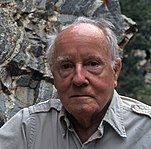

 Date of Birth: 13-May-1925
 Place of Birth: Los Angeles, California, United States
Date of Death: 26-Oct-2018
Profession: geologist
Zodiac Sign: Taurus 
About Warren B. Hamilton
- Warren B.
- Hamilton (May 13, 1925 – October 26, 2018) was an American geologist known for integrating observed geology and geophysics into planetary-scale syntheses describing the dynamic and petrologic evolution of Earth's crust and mantle.
- His primary career (1952–1995) was as a research scientist with the US Geological Survey (USGS) in geologic, then geophysical, branches.
- After retirement, he became a Distinguished Senior Scientist in the Department of Geophysics, Colorado School of Mines (CSM).
- He was a member of the National Academy of Sciences, and a holder of the Penrose Medal, highest honor of the Geological Society of America (GSA).
- Hamilton served in the US Navy from 1943 to 1946, completed a bachelor's degree at the University of California, Los Angeles (UCLA) in a Navy training program in 1945, and was a commissioned officer on the aircraft carrier USS Tarawa.
- After returning to civilian life, he earned an MSc in Geology from the University of Southern California in 1949, and a PhD in Geology from UCLA in 1951.
- He married Alicita V.
- Koenig (1926–2015) in 1947.
- Hamilton died in October 2018 at the age of 93; until the last few weeks he was working on new research.
- His final paper, "Toward a myth-free geodynamic history of Earth and its neighbors," was published posthumously (2019) in Earth-Science Reviews.
Read more at Wikipedia