
 Date of Birth:
About Braulio Orue-Vivanco
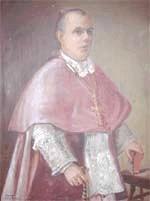
- Braulio Orue-Vivanco (March 6, 1843 in Havana, Cuba – October 21, 1904 in Pinar del Río, Cuba) was the first Bishop of the Diocese of Pinar del Río. His parents were Joaquin Orue-de las Casas and Josefa Vivanco.
- He studied at the Royal School of St.
- Ferdinand (Real Colegio de San Fernando) and at Colegio de Belén.
- He later studied at the San Carlos and San Ambrosio Seminary and at the University of Havana.
- He was ordained a priest in 1867.
- He served as a priest in various parishes. On February 20, 1903, he was a priest at the parish of Santo Angel when he was elevated by Pope Leo XIII as the first Bishop of the new Diocese of Pinar del Río.
- He was consecrated at the Cathedral of Havana by Mons.
- Placide-Louis Chapelle, Archbishop of the Archdiocese of New Orleans and Apostolic Delegate of Cuba and Puerto Rico and assisted by Mons.
- Francisco de Paula Barnada-Aguilar, Archbishop of the Archdiocese of Santiago de Cuba. He died October 21, 1904 and his funeral was held at the Cathedral of San Rosendo in Pinar del Río.
- His post was left vacant until 1907 when Manuel Ruiz-Rodriguez was made bishop.
Read more at Wikipedia
Image Author, Source and License
Author: Unknown
Source:
License: CC-PD-Mark
PD Cuba
PD Old
PD US
PD-Art (PD-old default)
PD-Art (PD-old-70)
More Details
Source:

|
This work was created in Cuba and is now in the public domain because its term of copyright has expired. According to Cuban law #14 and subsequent amendments, copyright terms in Cuba are the following: |  | |||||||||||||||
||
| For a file to be hosted on Wikimedia Commons, it must be in the public domain in both Cuba and the United States. | |||||||||||||||||
| ¹For a work to be public domain in the United States, its copyright must have expired in Cuba before Cuba joined the Berne Convention on February 20, 1997. | |||||||||||||||||
| Note 2: Notwithstanding the conditions set above, the state of Cuba may decide to transfer to the state the copyright on works when the copyright term for the creator of it has expired, as set by the 48º article of Cuban Copyright law. Such works would not be free of copyright, and may be deleted at any time. | |||||||||||||||||
License: CC-PD-Mark
PD Cuba
PD Old
PD US
PD-Art (PD-old default)
PD-Art (PD-old-70)
More Details