Archibald Steele, Date of Birth, Place of Birth, Date of Death
TweetArchibald Steele
American journalist
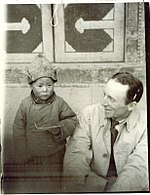

 Date of Birth: 25-Jun-1903
 Place of Birth: Toronto, Ontario, Canada
Date of Death: 28-Feb-1992
Profession: journalist
Nationality: United States
Zodiac Sign: Cancer 
About Archibald Steele
- Archibald Trojan Steele (25 June 1903 Toronto, Ontario - 26 February 1992 Sedona, Arizona) was an American foreign or war correspondent for United Press, the New York Times, the Chicago Daily News and, the New York Herald Tribune.
- He covered China, Southeast Asia, the Middle East, and Africa from the early 1930s until his retirement in 1960.
- He then published several books, and is known for filing reports of the Nanjing Massacre in 1937 that first informed the world of the activities of the Japanese Army. In 1950 Steele was co-winner of a George Polk award, given by Long Island University, for reporting on China for The New York Herald Tribune.
- In 1955 he won a Maria Moors Cabot medal, given by Columbia University, for articles in The Herald Tribune about a journey with his wife from Alaska to Chile.
- In 1966, he was named by Secretary of State Dean Rusk to a panel of nineteen experts to advise on US policy on China Steele recalled that "When I returned from the Orient I would usually take refuge in Boise, Idaho, capital of the potato state.
- Usually the State Department didn't even know that I was in the country.
- I was never sought out when I returned from China." Steven W.
- Mosher's book, China Misperceived included Steele in his criticisms of the China Hands, the diplomats and journalists who were held responsible for the loss of China. In response to these and other comments, the journalist Harrison Salisbury wrote in 1991 that Steele deserved "a special place in the journalist's Hall of Fame."
Read more at Wikipedia
See Also
- Famous People's Birthdays on 25 June, Canada
- Famous People's Birthdays in June, Canada
- Famous People's Birthdays on 25 June, United States
- Famous People's Birthdays in June, United States
- Famous journalist's Birthdays on 25 June, Canada
- Famous journalist's Birthdays in June, Canada
- Famous journalist's Birthdays on 25 June, United States
- Famous journalist's Birthdays in June, United States