William Henry Steward, Date of Birth, Place of Birth, Date of Death
TweetWilliam Henry Steward
civil rights activist from Louisville, Kentucky.
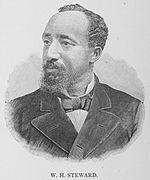

 Date of Birth: 26-Jul-1847
 Place of Birth: Brandenburg, Kentucky, United States
Date of Death: 03-Jan-1935
Profession: civil rights advocate, journalist
Nationality: United States
Zodiac Sign: Leo 
About William Henry Steward
- William Henry Steward (July 26, 1847 – January 3, 1935) was a civil rights activist from Louisville, Kentucky.
- In February 1876, he was appointed the first black letter carrier in Kentucky.
- He was the leading layman of the General Association of Negro Baptists in Kentucky and played a key role in the founding of Simmons College of Kentucky by the group in 1879.
- He continued to play an important role in the college during his life.
- He was also co-founder of the American Baptist, a journal associated with the group, and Steward went on to be the journal's editor.
- He was a leader in Louisville civic and public life, and played a role in extending educational opportunities in the city to black children.
- In 1897, his political associations led to his appointment as judge of registration and election for the Fifteenth Precinct of the Ninth Ward, overseeing voter registration for the election.
- This was the first appointment of an African American to such a position in Kentucky.
- He was elected president of the Afro-American Press Association in the 1890s He was a close associate of Booker T.
- Washington, and in the late 1890s and early 1900s, Steward was a prominent member of the National Afro-American Council, which was dominated by Washington.
- He was president of the Council from 1904 to 1905.
- He was a lifelong opponent of segregation and was frequently involved in anti-Jim Crow law activities.
- In 1914 he helped found a Louisville branch of the National Association for the Advancement of Colored People (NAACP), which he left in 1920 to become a key player in the Commission on Interracial Cooperation (CIC).
- He was also a prominent freemason and twice elected Worshipful Master of the Grand Lodge of Kentucky.
Read more at Wikipedia
See Also
- Famous People's Birthdays on 26 July, United States
- Famous People's Birthdays in July, United States
- Famous civil rights advocate's Birthdays on 26 July, United States
- Famous civil rights advocate's Birthdays in July, United States
- Famous journalist's Birthdays on 26 July, United States
- Famous journalist's Birthdays in July, United States