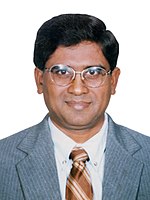

 Date of Birth:
About M. C. Nandeesha
- Mudnakudu Channabasappa Nandeesha (1 July 1957 – 27 December 2012) was a development researcher, innovative aquaculture development worker and educator.
- He is recognized for making critical contributions to the rapid growth of aquaculture by applying research to key bottlenecks to fish production.
- In India, he conducted successful pioneering field tests of Ovaprim, an ovulating agent, under different agro-climatic conditions to help remove a critical early barrier for freshwater fish breeding.
- His significant scientific contributions include simplified breeding technology for cyprinids and development of feeds and feeding techniques appropriate to rural aquaculture, and helping improve and spread the practices of small scale fish farming at a time when most attention was on large scale producers.
- He wrote a regular and widely acclaimed column in Network of Aquaculture Centers in Asia-Pacific (NACA) Aquaculture Asia magazine on farmer innovations in aquaculture.
- He was described as an "ambassador for aquaculture" and was especially noted for promoting aquaculture for the disadvantaged poor households and women.
- Along with Michael New, in 2003 he was a founding member of the not-for-profit organisation, Aquaculture without Frontiers.
- While encouraging poor people to take up aquaculture, he was also a pioneer in promoting equity for women, who had been neglected in the aquaculture boom.
- Throughout his career, he was in the forefront of initiatives to upgrade the professionalism of fisheries and aquaculture experts, and inspired peers and students in critical new directions.His professional career, which began in the 1980s, made significant contributions during the important early rapid development of Indian, Asian and world aquaculture.
- In this period, aquaculture became and remains the fastest growing food production sector.
- For Indian major carps (see catla, mrigal and rohu), of which about 5 million tonnes are now produced annually (compared to just over 200 thousand tonnes in 1980), Nandeesha established critical improved breeding and seed production approaches, and feed and nutrition regimes, and began his promotion of women's roles and the need for gender equality in fisheries and aquaculture.
- In Cambodia, he pioneered the spread of small scale fish farming and fish seed production.
- In Bangladesh, he encouraged farmer-participatory research and elevated the importance of the role of women in Bangladesh aquaculture.
- When working in Cambodia and Bangladesh, Nandeesha was motivated by the conditions he witnessed to create more inclusive aquaculture development concerned with helping farmers and their households in poverty eradication and food security and nutrition, and in building human resources.
- While subsequently working for international agencies in several countries, he energized the field of aquaculture research for development and worked in developing its professional societies and human resources, and creating professional international institutional partnerships. Nandeesha received several honors for his work.
- He was formally honored by government and professional society awards at several levels: national, among which were the Royal Order of Sahametrei Knight Award by the Prime Minister of Cambodia, and the Asian Fisheries Society Indian Branch gold medal; regional, e.g., Asian Fisheries Society gold medal; and global, e.g., World Aquaculture Society fellow.
- He held leadership positions in several professional and industry societies, one of which, the Asian Fisheries Society Indian Branch he helped create.
- He helped build stronger and new higher education institutions for aquaculture, including the Tamil Nadu Fisheries University that he helped build out of the Fisheries College and Research Institute, Thoothukudi, Tamil Nadu.
- He was Vice-Chancellor Designate when he died.
- Posthumously, his contributions were recognized by special tributes from his peers, and an FAO sponsored course in advanced fisheries and aquaculture economics named in his honor.
- In honors reserved for few people, the Asian Fisheries Society, World Aquaculture Society and Asian Fisheries Society Indian Branch, have named awards in his honor.
Read more at Wikipedia