Jeremy Corbyn, Date of Birth, Place of Birth
TweetJeremy Corbyn
British Labour Party politician
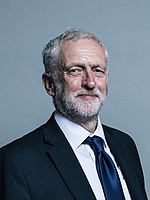

 Date of Birth: 26-May-1949
 Place of Birth: Chippenham, England, United Kingdom
Profession: prime minister, trade unionist
Nationality: United Kingdom
Zodiac Sign: Gemini 
jeremycorbyn
JeremyCorbynMP
About Jeremy Corbyn
- Jeremy Bernard Corbyn (; born 26 May 1949) is a British politician serving as leader of the Labour Party and leader of the Opposition since 2015.
- Corbyn has been the Member of Parliament (MP) for Islington North since 1983.
- Ideologically, he identifies as a democratic socialist.Born in Chippenham and raised in both Wiltshire and Shropshire, Corbyn joined Labour as a teenager.
- Moving to London, he became a trade union representative.
- In 1974, he was elected to Haringey Council and also became Secretary of Hornsey Constituency Labour Party, until elected as the MP for Islington North in 1983.
- His activism has included roles in Anti-Fascist Action, the Anti-Apartheid Movement and the Campaign for Nuclear Disarmament, and advocating for a united Ireland.
- As a backbench MP, he frequently voted against the Labour whip, including "New Labour" governments under Tony Blair and Gordon Brown.
- A vocal opponent of the Iraq War, he chaired the Stop the War Coalition from 2011 to 2015.
- He received the Gandhi International Peace Award in 2013 and the Seán MacBride Peace Prize in 2017. Corbyn was elected Labour leader in 2015.
- The party's membership increased sharply, both during the leadership campaign and following his election.
- Taking the party to the left, he advocated renationalisation of public utilities and the railways, a less interventionist military policy, and reversals of austerity cuts to welfare and public services.
- Although critical of the European Union, he supported continued membership in the 2016 referendum.
- After Labour MPs sought to remove him in 2016, he won a second leadership contest.
- In the 2017 general election, Labour increased its share of the vote to 40%, with Labour's 9.6% vote swing being its largest since 1945.
- Labour, under Corbyn, achieved a net gain of 30 seats and a hung parliament, but the party remained in Opposition.
- In 2019, Corbyn endorsed holding a referendum on any Brexit withdrawal agreement, with a personal stance of neutrality.
- In the 2019 general election, Labour's vote share of 32% fell compared with 2017, though higher than in 2015 and 2010, and it obtained 202 seats, its fewest since 1935.
- Corbyn said that he would not lead Labour into the next election.
- Media coverage of Corbyn has been generally hostile.
- He has condemned antisemitism but has been criticised for some of his past associations and his response to antisemitism within the Labour Party.
Read more at Wikipedia
See Also
- Famous People's Birthdays on 26 May, United Kingdom
- Famous People's Birthdays in May, United Kingdom
- Famous prime minister's Birthdays on 26 May, United Kingdom
- Famous prime minister's Birthdays in May, United Kingdom
- Famous trade unionist's Birthdays on 26 May, United Kingdom
- Famous trade unionist's Birthdays in May, United Kingdom
Image Author, Source and License
Author:
Source:
License: CC-BY-3.0
More Details
Chris McAndrew
  |
|||
|---|---|---|---|
| Description | British portrait photographer and photographer | ||
| Authority control | |||
Source:
https://api20170418155059.azure-api.net/photo/u0mXpY2m.jpeg?crop=MCU_3:4&quality=80&download=true
License: CC-BY-3.0
More Details