Andrew III of Hungary, Date of Birth, Place of Birth, Date of Death
TweetAndrew III of Hungary
King of Hungary and Croatia between 1290 and 1301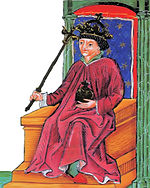

 Date of Birth:
  Place of Birth: Venice, Venetian Province, Italy
About Andrew III of Hungary
- Andrew III the Venetian (Hungarian: III.
- Velencei András, Croatian: Andrija III.
- Mlecanin, Slovak: Ondrej III.; c.
- 1265 – 14 January 1301) was King of Hungary and Croatia between 1290 and 1301.
- His father, Stephen the Posthumous, was the posthumous son of Andrew II of Hungary although Stephen's brothers considered him a bastard.
- Andrew grew up in Venice, and first arrived in Hungary upon the invitation of a rebellious baron, Ivan Koszegi, in 1278.
- Koszegi tried to play Andrew off against Ladislaus IV of Hungary, but the conspiracy collapsed and Andrew returned to Venice. Being the last male member of the House of Árpád, Andrew was elected king after the death of King Ladislaus IV in 1290.
- He was the first Hungarian monarch to issue a coronation diploma confirming the privileges of the noblemen and the clergy.
- At least three pretenders—Albert of Austria, Mary of Hungary, and an adventurer—challenged his claim to the throne.
- Andrew expelled the adventurer from Hungary and forced Albert of Austria to conclude a peace within a year, but Mary of Hungary and her descendants did not renounce their claim.
- The Hungarian bishops and Andrew's maternal family from Venice were his principal supporters, but the leading Croatian and Slavonian lords were opposed to his rule. Hungary was in a state of constant anarchy during Andrew's reign.
- The Koszegis, the Csáks, and other powerful families autonomously governed their domains, rising up nearly every year in open rebellion against Andrew.
- With Andrew's death, the House of Árpád became extinct.
- A civil war ensued which lasted for more than two decades and ended with the victory of Mary of Hungary's grandson, Charles Robert.
Read more at Wikipedia
See Also
- Famous People's Birthdays on 01 January, Italy
- Famous People's Birthdays in January, Italy
- Famous People's Birthdays on 01 January, Hungary
- Famous People's Birthdays in January, Hungary
- Famous politician's Birthdays on 01 January, Italy
- Famous politician's Birthdays in January, Italy
- Famous politician's Birthdays on 01 January, Hungary
- Famous politician's Birthdays in January, Hungary