Maxim Litvinov, Date of Birth, Place of Birth, Date of Death
TweetMaxim Litvinov
Soviet diplomat, foreign minister 1930–39, ambassador to USA 1941–43
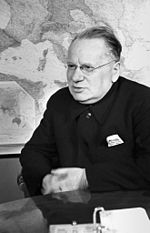

 Date of Birth: 17-Jul-1876
 Place of Birth: Białystok, Podlaskie Voivodeship, Poland
Date of Death: 31-Dec-1951
Profession: politician, diplomat
Zodiac Sign: Cancer 
About Maxim Litvinov
- Maxim Maximovich Litvinov, Russian pronunciation: [m?'ks?im m?'ks?im?v??t? l??'tv?in?f]; born Meir Henoch Wallach (17 July 1876 – 31 December 1951) was an ethnic Jewish Russian revolutionary and prominent Soviet Bolshevik politician. A strong advocate of diplomatic agreements leading towards disarmament, Litvinov was influential in making the Soviet Union a party to the Kellogg–Briand Pact of 1928 and was chiefly responsible in 1929 for adoption of the so-called Litvinov Protocol, a multilateral agreement bringing Kellogg-Briand into force between the USSR and a number of neighboring states.
- In 1930 Litvinov was named as People's Commissar of Foreign Affairs, the top-ranking diplomatic position in the Soviet state.
- During the subsequent decade, Litvinov emerged as a leading voice for the official Soviet policy of collective security. In May 1939 Litvinov was sacked because he did not believe the West was serious about confronting Adolf Hitler and was replaced with Vyacheslav Molotov, who had to continue negotiations about an anti-Hitler alliance.
- Litvinov survived the Great Patriotic War and died a natural death in the USSR in 1951.
Read more at Wikipedia