James Bradley, Date of Birth, Place of Birth, Date of Death
TweetJames Bradley
English astronomer; Astronomer Royal
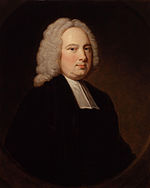

 Date of Birth: 01-Jan-0001
 Place of Birth: Sherborne, England, United Kingdom
Date of Death: 13-Jul-1762
Profession: astronomer, university teacher
Zodiac Sign: Capricorn 
About James Bradley
- James Bradley (1693–1762) was an English astronomer and priest who served as Astronomer Royal from 1742.
- He is best known for two fundamental discoveries in astronomy, the aberration of light (1725–1728), and the nutation of the Earth's axis (1728–1748).
- These discoveries were called "the most brilliant and useful of the century" by Jean Baptiste Joseph Delambre, historian of astronomy, mathematical astronomer and director of the Paris Observatory, in his history of astronomy in the 18th century (1821), because "It is to these two discoveries by Bradley that we owe the exactness of modern astronomy.
- ...
- This double service assures to their discoverer the most distinguished place (after Hipparchus and Kepler) above the greatest astronomers of all ages and all countries."
Read more at Wikipedia
See Also
- Famous People's Birthdays on 01 January, United Kingdom
- Famous People's Birthdays in January, United Kingdom
- Famous astronomer's Birthdays on 01 January, United Kingdom
- Famous astronomer's Birthdays in January, United Kingdom
- Famous university teacher's Birthdays on 01 January, United Kingdom
- Famous university teacher's Birthdays in January, United Kingdom
Image Author, Source and License
Author:
Source:
License: CC-PD-Mark
PD-Art (PD-old-100)
More Details
Thomas Hudson
(1701–1779)   |
|||
|---|---|---|---|
 |
|||
| Description | English art collector and painter | ||
| Date of birth/death | 1701 | 26 January 1779 | |
| Location of birth/death | Devon | Twickenham | |
| Work location | London | ||
| Authority control | |||
Source:
National Portrait Gallery: NPG 1073

|
While Commons policy accepts the use of this media, one or more third parties have made copyright claims against Wikimedia Commons in relation to the work from which this is sourced or a purely mechanical reproduction thereof. This may be due to recognition of the "sweat of the brow" doctrine, allowing works to be eligible for protection through skill and labour, and not purely by originality as is the case in the United States (where this website is hosted). These claims may or may not be valid in all jurisdictions.
As such, use of this image in the jurisdiction of the claimant or other countries may be regarded as copyright infringement. Please see Commons:When to use the PD-Art tag for more information. See User:Dcoetzee/NPG legal threat for original threat and National Portrait Gallery and Wikimedia Foundation copyright dispute for more information. This tag does not indicate the copyright status of the attached work. A normal copyright tag is still required. See Commons:Licensing. |
License: CC-PD-Mark
PD-Art (PD-old-100)
More Details