Thomas Moore, Date of Birth, Place of Birth, Date of Death
TweetThomas Moore
Irish poet, singer and songwriter
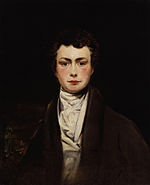

 Date of Birth: 28-May-1779
 Place of Birth: Dublin, Leinster, Ireland
Date of Death: 25-Feb-1852
Profession: writer, composer, poet, conductor, singer, jurist, historian, musician, performing artist, songwriter, lyricist, poet lawyer, novelist
Nationality: Ireland, United Kingdom
Zodiac Sign: Gemini 
About Thomas Moore
- Thomas Moore (28 May 1779 – 25 February 1852) was an Irish poet, singer, songwriter, and entertainer, now best remembered for the lyrics of "The Minstrel Boy" and "The Last Rose of Summer".
- As Lord Byron's named literary executor, along with John Murray, Moore was responsible for burning Lord Byron's memoirs after his death.
- In his lifetime he was often referred to as Anacreon Moore.From a relatively early age Moore showed an interest in music and other performing arts.
- He sometimes appeared in musical plays with his friends, such as The Poor Soldier by John O'Keeffe (music by William Shield), and at one point had ambitions to become an actor.
- Moore attended several Dublin schools including Samuel Whyte's English Grammar School in Grafton Street where he learned the English accent with which he spoke for the rest of his life.
- In 1795 he graduated from Trinity College, which had recently allowed entry to Catholic students, in an effort to fulfill his mother's dream of his becoming a lawyer.
- Moore was initially a good student, but he later put less effort into his studies.
- His time at Trinity came amidst the ongoing turmoil following the French Revolution, and a number of his fellow students such as Robert Emmet were supporters of the United Irishmen movement, although Moore himself never was a member.
- This movement sought support from the French government to launch a revolution in Ireland.
- In 1798 a rebellion broke out followed by a French invasion, neither of which succeeded. Besides Emmet, another formative influence was Edward Hudson, also a fellow student at Trinity College, who played a crucial role in introducing Moore to Edward Bunting's A General Collection of the Ancient Irish Music (1797), later one of the main sources of his own collection of Irish Melodies.
Read more at Wikipedia
See Also
- Famous People's Birthdays on 28 May, Ireland
- Famous People's Birthdays in May, Ireland
- Famous People's Birthdays on 28 May, United Kingdom
- Famous People's Birthdays in May, United Kingdom
- Famous writer's Birthdays on 28 May, Ireland
- Famous writer's Birthdays in May, Ireland
- Famous composer's Birthdays on 28 May, Ireland
- Famous composer's Birthdays in May, Ireland
- Famous poet's Birthdays on 28 May, Ireland
- Famous poet's Birthdays in May, Ireland
- Famous conductor's Birthdays on 28 May, Ireland
- Famous conductor's Birthdays in May, Ireland
- Famous singer's Birthdays on 28 May, Ireland
- Famous singer's Birthdays in May, Ireland
- Famous jurist's Birthdays on 28 May, Ireland
- Famous jurist's Birthdays in May, Ireland
- Famous historian's Birthdays on 28 May, Ireland
- Famous historian's Birthdays in May, Ireland
Image Author, Source and License
Author:
Source:
License: PD-Art (PD UK)
More Details
Unknown
Source:
National Portrait Gallery: NPG 1340

|
While Commons policy accepts the use of this media, one or more third parties have made copyright claims against Wikimedia Commons in relation to the work from which this is sourced or a purely mechanical reproduction thereof. This may be due to recognition of the "sweat of the brow" doctrine, allowing works to be eligible for protection through skill and labour, and not purely by originality as is the case in the United States (where this website is hosted). These claims may or may not be valid in all jurisdictions.
As such, use of this image in the jurisdiction of the claimant or other countries may be regarded as copyright infringement. Please see Commons:When to use the PD-Art tag for more information. See User:Dcoetzee/NPG legal threat for original threat and National Portrait Gallery and Wikimedia Foundation copyright dispute for more information. This tag does not indicate the copyright status of the attached work. A normal copyright tag is still required. See Commons:Licensing. |
License: PD-Art (PD UK)
More Details