
 Date of Birth:
  Place of Birth: Uusikaupunki, South-Western Finland Regional State Administrative Agency, Finland
About Aimo Cajander
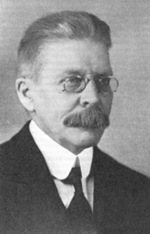
- Aimo Kaarlo Cajander (4 April 1879 – 21 January 1943) was the Prime Minister of Finland up to the Winter War.Cajander was born in Uusikaupunki, and became a botanist, a professor of forestry 1911–34; director-general for Finland's Forest and Park Service 1934–1943; Prime Minister in 1922, 1924, and 1937–1939; chairman of the National Progressive Party 1933–1943; and Member of Parliament.
- Cajander came into politics in 1922 when President Ståhlberg asked him to take office of prime minister.
- He had not earlier participated actively in politics.
- Ståhlberg invited him as prime minister second time in January 1924.
- Cajander's short-lived cabinets were merely caretakers before parliamentary elections. Cajander joined in 1927 National Progressive Party and in 1928 he was chosen as Minister of Defence.
- Cajander was elected to the Parliament in 1929.
- When Kyösti Kallio was elected President in 1937, Cajander was asked as the chairman of the National Progressive Party to form majority government.
- Cajander formed a coalition government of the two largest parties in the parliament - Social Democrats and Agrarian League.
- Cajander was idealist who did not believe yet in August 1939 that Soviet Union would attack Finland.
- Partly for this reason the Finnish Army was forced to the fight inadequately equipped.
- He died in Helsinki, aged 63. Cajander's name is remembered for "Model Cajander", the fashion of many Finnish soldiers in Winter War: the army was poorly equipped, so mobilized reserves were given a utility belt, an emblem to be attached to the hat — to comply with the Hague Conventions; and a rifle.
- Otherwise, they had to use their own clothes and equipment.
Read more at Wikipedia
See Also
- Famous People's Birthdays on 04 April, Finland
- Famous People's Birthdays in April, Finland
- Famous writer's Birthdays on 04 April, Finland
- Famous writer's Birthdays in April, Finland
- Famous politician's Birthdays on 04 April, Finland
- Famous politician's Birthdays in April, Finland
- Famous university teacher's Birthdays on 04 April, Finland
- Famous university teacher's Birthdays in April, Finland
- Famous botanist's Birthdays on 04 April, Finland
- Famous botanist's Birthdays in April, Finland
- Famous forestry scientist's Birthdays on 04 April, Finland
- Famous forestry scientist's Birthdays in April, Finland