Charles Talbot, 1st Duke of Shrewsbury, Date of Birth, Place of Birth, Date of Death
TweetCharles Talbot, 1st Duke of Shrewsbury
British diplomat
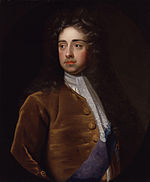

 Date of Birth: 24-Jul-1660
 Place of Birth: England, United Kingdom
Date of Death: 01-Feb-1718
Profession: politician, diplomat
Zodiac Sign: Leo 
About Charles Talbot, 1st Duke of Shrewsbury
- Charles Talbot, 1st Duke of Shrewsbury, KG, PC (24 July 1660 – 1 February 1718) was an English politician who was part of the Immortal Seven group that invited William III, Prince of Orange, to depose James II of England as monarch during the Glorious Revolution.
- He was appointed to several minor roles before the revolution, but came to prominence as a member of William's government.
- Born to Roman Catholic parents, he remained in that faith until 1679 when—during the time of the Popish Plot and following the advice of the divine John Tillotson—he converted to the Church of England.
- Shrewsbury took his seat in the House of Lords in 1680 and three years later was appointed Gentleman-Extraordinary of the Bedchamber, suggesting he was in favour at the court of Charles II.With the accession in 1685 of James II, Shrewsbury was appointed a captain in order to defeat the Monmouth rebellion, although he resigned his commission in 1687 after refusing to bow to pressure from James to convert back to the Catholic faith.
- Making contact with William of Orange, Shrewsbury's home became a meeting place for the opposition to James II and Shrewsbury was one of seven English statesmen to sign the invitation to William to invade England in June 1688.
- In September he fled England for Holland and returned with William to England in November.
- Shrewsbury was influential in the making of the Revolution Settlement, arguing strongly in favour of recognising William and Mary as sovereigns.
- Shrewsbury resigned from William's government in 1690 due to ill-health and his opposition to the dissolution of Parliament and the dropping of the Bill that would have required an oath abjuring James as King.
- In opposition, Shrewsbury contacted the exiled Stuart court in France as a prelude to a Stuart restoration.
- In 1694, Shrewsbury returned to government and was prominent in persuading the House of Commons to vote for the funds needed for William's war against France.
- Ill-health led to his resignation in 1698, but he returned to the government in 1699 until resigning again in 1700.From 1700 until 1705, Shrewsbury was in self-imposed exile abroad, visiting France, Switzerland, Italy, and marrying Countess Adelhida Paleotti.
- Upon his return to England, Shrewsbury concentrated on the construction of Heythrop Park.
- In April 1710 Shrewsbury return to government and was an early supporter of the Tory efforts to negotiate peace with France to end the War of the Spanish Succession, concerned at the negative financial impact it was having on landowners.
- However he was uncomfortable with peace negotiations that left out Britain's ally, the Dutch.
- In November 1712 he was appointed ambassador to France and then Lord Lieutenant of Ireland, returning to England in June 1714.In July Shrewsbury was appointed Lord Treasurer but in August Queen Anne died and George I succeeded her.
- The new Whig regime opposed Shrewsbury remaining in government and by 1715 he had lost all his governmental offices, although until his death he remained George's Groom of the Stole.
- Shrewsbury opposed the Whigs' attack on the previous Tory ministers and opposed their other policies in the Lords, making contact with the Stuart Pretender and sending him money.
- He died of inflammation of the lungs in 1718.
Read more at Wikipedia
See Also
- Famous People's Birthdays on 24 July, United Kingdom
- Famous People's Birthdays in July, United Kingdom
- Famous politician's Birthdays on 24 July, United Kingdom
- Famous politician's Birthdays in July, United Kingdom
- Famous diplomat's Birthdays on 24 July, United Kingdom
- Famous diplomat's Birthdays in July, United Kingdom
Image Author, Source and License
Author:
Source:
License: CC-PD-Mark
PD-Art (PD-old-100)
More Details
Godfrey Kneller
(1646–1723)    |
|||
|---|---|---|---|
 |
|||
| Alternative names | Gottfried Kneller, Birth name: Gottfried Kniller | ||
| Description | German painter, draughtsman, engraver and miniaturist | ||
| Date of birth/death | 8 August 1646 | 7 November 1723 | |
| Location of birth/death | Lübeck | London | |
| Work period | between circa 1660 and circa 1723 | ||
| Work location | Leiden (circa 1660–1665), Rome, Venice (1672–1675), Nuremberg, Hamburg (1674–1676), London (1676–1723), France (1684–1685) | ||
| Authority control | |||
Source:
National Portrait Gallery: NPG 1424

|
While Commons policy accepts the use of this media, one or more third parties have made copyright claims against Wikimedia Commons in relation to the work from which this is sourced or a purely mechanical reproduction thereof. This may be due to recognition of the "sweat of the brow" doctrine, allowing works to be eligible for protection through skill and labour, and not purely by originality as is the case in the United States (where this website is hosted). These claims may or may not be valid in all jurisdictions.
As such, use of this image in the jurisdiction of the claimant or other countries may be regarded as copyright infringement. Please see Commons:When to use the PD-Art tag for more information. See User:Dcoetzee/NPG legal threat for original threat and National Portrait Gallery and Wikimedia Foundation copyright dispute for more information. This tag does not indicate the copyright status of the attached work. A normal copyright tag is still required. See Commons:Licensing. |
License: CC-PD-Mark
PD-Art (PD-old-100)
More Details