Wayne Wheeler, Date of Birth, Place of Birth, Date of Death
TweetWayne Wheeler
American temperance activist
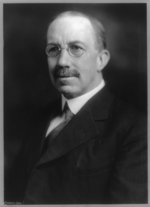

 Date of Birth: 10-Nov-1869
 Place of Birth: Brookfield Township, Ohio, United States
Date of Death: 05-Sep-1927
Profession: lawyer, jurist
Nationality: United States
Zodiac Sign: Scorpio 
About Wayne Wheeler
- Wayne Bidwell Wheeler (November 10, 1869 – September 5, 1927) was an American attorney and longtime leader of the Anti-Saloon League.
- The leading advocate of the prohibitionist movement in the late 1800s and early 1900s, he played a major role in the passage of the Eighteenth Amendment to the United States Constitution, which outlawed the manufacture, distribution, and sale of alcoholic beverages.A native of Brookfield Township in Trumbull County, Ohio, Wheeler was raised on his family's farm, and a childhood accident caused by an intoxicated hired hand gave Wheeler a lifelong aversion to alcohol, as well as an anecdote he later used in recruiting converts to the prohibition movement and promoting a prohibition amendment to the U.S.
- Constitution.
- Wheeler graduated from high school in Ohio, received his teaching qualification, and taught for two years before becoming a student at Oberlin College.
- After graduating in 1894, Wheeler became an organizer for the Anti-Saloon League.
- He earned his LL.B.
- degree from Western Reserve University in 1898.
- In 1902, Wheeler became head of the Anti-Saloon League, and perfected a system of single issue pressure politics, including media campaigns and public demonstrations, to win enactment of laws limiting or banning the sale and consumption of alcohol. Wheeler's career hit its high point with the passage of the Eighteenth Amendment and the Volstead Act in 1920.
- As enforcement of Prohibition became increasingly difficult, federal agencies resorted to draconian measures including poisoning alcohol to try to dissuade people from consuming it.
- Wheeler's refusal to compromise, for example by amending Prohibition measures to allow for consumption of beer and ale, made him appear increasingly unreasonable.
- His influence began to wane, and he retired in 1927. Soon after his retirement, Wheeler was beset by several tragedies.
- His wife was killed in an accidental kitchen fire, and his father-in-law had a fatal heart attack after trying unsuccessfully to aid her.
- Wheeler suffered from kidney disease, and died at a sanitarium in Battle Creek, Michigan on September 5, 1927.
Read more at Wikipedia
See Also
- Famous People's Birthdays on 10 November, United States
- Famous People's Birthdays in November, United States
- Famous lawyer's Birthdays on 10 November, United States
- Famous lawyer's Birthdays in November, United States
- Famous jurist's Birthdays on 10 November, United States
- Famous jurist's Birthdays in November, United States
Image Author, Source and License
Author:
Source:
License: PD-Harris-Ewing
More Details
English: Published by Harris & Ewing, background available at the Library of Congress
Source:

|
This image is available from the United States Library of Congress's Prints and Photographs division
under the digital ID cph.3b20313. This tag does not indicate the copyright status of the attached work. A normal copyright tag is still required. See Commons:Licensing for more information.
|
License: PD-Harris-Ewing
More Details