Carlo Roberto Dati, Date of Birth, Place of Birth, Date of Death
TweetCarlo Roberto Dati
Italian philologist and scientist
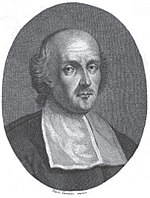

 Date of Birth: 12-Oct-1619
 Place of Birth: Florence, Tuscany
Date of Death: 01-Jan-1676
Profession: academic, philologist
Zodiac Sign: Libra 
About Carlo Roberto Dati
- Carlo Roberto Dati (1619–1676) was a Florentine nobleman, philologist and scientist, a disciple of Galileo (1564-1642) and, in his youth, an acquaintance of Evangelista Torricelli (1608-1647). He befriended Lorenzo Magalotti (1637-1712) and Francesco Redi (1626-1697).
- Redi dedicated his Esperienze intorno alla generazione degl'insetti [Experiments on the generation of insects] (Florence, 1668) to Dati.
- A founder of the Accademia del Cimento, Dati participated assiduously in its meetings.
- As Secretary of the Accademia della Crusca, he initiated the third edition of the Vocabolario (1691) and wrote the Discorso dell'obbligo di ben parlare la propria lingua (1657), in which he staunchly claimed the supremacy of Florentine Italian. He authored many scientific works, including the Lettera ai Filaleti della vera storia della cicloide e della famosissima esperienza dell'argento vivo [Letter to the Filaleti regarding the true story of the cycloid and the well-known sterling silver experience] (Florence, 1663), written under the pseudonym of Timauro Antiate.
- In it, he claimed the Tuscan - and thus Medicean - priority in the correct interpretation of Torricelli's 1644 experiment, which had sparked a lively discussion all over Europe.
- He also published many historical, political, and literary works, including the fascinating Vite de' pittori antichi [Lives of the old painters] (1667), dedicated to Louis XIV (1638-1715).
- Bayle, speaking of this work, says that it would have saved him a great deal of trouble, as it would have assured him many materials in the article of Zeuxis, if he had met with it sooner.
- It is the life of Zeuxis, together with those of Parrhasius, Apelles, and Protogenes.
- «The author,» says Bayle, «hath collected whatever he found relating to those four painters in the works of the ancients, and hath very exactly connected the whole.
- Besides, he hath added to each life several remarks, full of very fine and curious erudition.»
Read more at Wikipedia
See Also
- Famous People's Birthdays on 12 October, Worldwide
- Famous People's Birthdays in October, Worldwide
- Famous academic's Birthdays on 12 October, Worldwide
- Famous academic's Birthdays in October, Worldwide
- Famous philologist's Birthdays on 12 October, Worldwide
- Famous philologist's Birthdays in October, Worldwide