Jelle Zijlstra, Date of Birth, Place of Birth, Date of Death
TweetJelle Zijlstra
42nd Prime Minister of the Netherlands
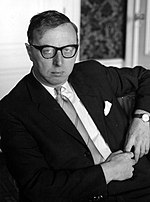

 Date of Birth: 27-Aug-1918
 Place of Birth: Oosterbierum, Friesland, Netherlands
Date of Death: 23-Dec-2001
Profession: politician, economist, banker, university teacher
Nationality: Kingdom of the Netherlands
Zodiac Sign: Virgo 
About Jelle Zijlstra
- For other people named Zijlstra, see Zijlstra. Jelle Zijlstra (Dutch pronunciation: ['j?l? 'z?ilstra?]; 27 August 1918 – 23 December 2001) was a Dutch politician of the defunct Anti-Revolutionary Party (ARP) now merged into the Christian Democratic Appeal (CDA) party and economist who served as Prime Minister of the Netherlands from 22 November 1966 until 5 April 1967.Zijlstra applied at the Rotterdam School of Economics in June 1937 majoring in Economics.
- Zijlstra was conscripted in the Royal Netherlands Army and was mobilized as a lieutenant in August 1939.
- Zijlstra obtained an Bachelor of Economics degree in February 1940.
- On 10 May 1940 Nazi Germany invaded the Netherlands and the government fled to London to escape the German occupation.
- Zijlstra fought in the Battle of the Netherlands and the Battle of France.
- During the German occupation Zijlstra continued his study but in April 1943 the German occupation authority closed the Rotterdam School of Economics and Zijlstra went in to hiding.
- Following the end of World War II Zijlstra returned to the Rotterdam School of Economics before graduating with an Master of Economics degree on 29 November 1945.
- Zijlstra worked as a researcher at the Rotterdam School of Economics from December 1945 until January 1947 and as an associate professor of Public economics at the Rotterdam School of Economics from 1 January 1947 until 8 July 1948 when got a doctorate as an Doctor of Philosophy in Public economics.
- Zijlstra worked as a professor of Public economics at the Free University Amsterdam from 28 October 1948 until 2 September 1952.
- After the election of 1952 Zijlstra was appointed as Minister of Economic Affairs in the Cabinet Drees II, taking office on 2 September 1952.
- After the Leader of the Anti-Revolutionary Party Jan Schouten announced his retirement from national politics and that he wouldn't not stand for the election of 1956 he approached Zijlstra as a candidate to succeed him, Zijlstra accepted and became the Leader of the Anti-Revolutionary Party and Lijsttrekker (top candidate) of the Anti-Revolutionary Party for the election on 23 April 1956.
- The Anti-Revolutionary Party made a small win, gaining 3 seats and now had 15 seats in the House of Representatives.
- Zijlstra was elected as a Member of the House of Representatives and became the Parliamentary leader of the Anti-Revolutionary Party in the House of Representatives, taking office on 3 July 1956.
- On 3 October 1956 Zijlstra announced that he was stepping down as Leader of the Anti-Revolutionary Party and Parliamentary leader in favor of Sieuwert Bruins Slot.
- Following the cabinet formation of 1956 Zijlstra continued as Minister of Economic Affairs in the Cabinet Drees III, taking office on 13 October 1956.
- The Cabinet Drees III fell on 11 December 1958 and continued to serve in a demissionary capacity until it was replaced by the caretaker Cabinet Beel II with Zijlstra remaining as Minister of Economic Affairs and appointed as Minister of Finance dual serving in both positions, taking office on 22 December 1958.
- Shortly thereafter the Leader of the Anti-Revolutionary Party Bruins Slot approached Zijlstra to stand once again as Leader and Lijsttrekker of the Anti-Revolutionary Party for the election of 1959, Zijlstra accepted and again became the Leader and Lijsttrekker for the election on 29 December 1958.
- The Anti-Revolutionary Party suffered a small loss, losing 1 seat and now had 14 seats in the House of Representatives.
- Zijlstra subsequently returned as a Member of the House of Representatives, taking office on 20 March 1959.
- Following the cabinet formation of 1959 Zijlstra remained as Minister of Finance in the Cabinet De Quay, taking office on 16 May 1959.
- On 26 May 1959 Zijlstra announced that he was stepping down as Leader once again in favor of Parliamentary leader Bruins Slot.
- In September 1962 Zijlstra announced that he wouldn't not stand for the election of 1963 but wanted run for the Senate.
- After the Senate election of 1963 Zijlstra was elected as a Member of the Senate, taking office on 25 June 1963 serving as a frontbencher.
- Following the cabinet formation of 1963 Zijlstra per his own request asked not to be considered for a cabinet post in the new cabinet, the Cabinet De Quay was replaced by the Cabinet Marijnen on 24 July 1963.
- Zijlstra returned as a distinguished professor of Public economics at the Free University Amsterdam serving from 1 January 1964 until 1 May 1967.
- He also worked as the director of the Abraham Kuyper Foundation from 1 August 1963 until 22 November 1966.
- Zijlstra also became active in the private sector and public sector and occupied numerous seats as a corporate director and nonprofit director on several boards of directors and supervisory boards (Unilever, General Bank of the Netherlands, Hollandsche Bank-Unie, The People's Bank and the Carnegie Foundation).On 16 September 1966 Zijlstra was nominated as the President of De Nederlandsche Bank (Central Bank of the Netherlands).
- On 14 October 1966 Cabinet Cals fell and continued to serve in a demissionary capacity.
- Following several failed cabinet formation attempts Zijlstra was approached by Vice-President of the Council of State and former Prime Minister Louis Beel of the Catholic People's Party as a compromise candidate for Prime Minister, Zijlstra accepted and was appointed as Formateur to form a new cabinet and his nomination as President of De Nederlandsche Bank was temporary suspended.
- The following cabinet formation of 1966 resulted in the continuation of the coalition agreement between the Catholic People's Party and the Anti-Revolutionary Party which formed the caretaker Cabinet Zijlstra with Zijlstra becoming Prime Minister of the Netherlands, Minister of General Affairs and Minister of Finance, taking office on 22 November 1966.
- Shortly thereafter Zijlstra announced that he wouldn't stand for the election of 1967.
- Following the cabinet formation of 1967 Zijlstra per his own request asked not to be considered for a cabinet post in the new cabinet, the Cabinet Zijlstra was replaced by the Cabinet De Jong on 5 April 1967 and on 25 April 1967 he was renomination as President of De Nederlandsche Bank, serving from 1 May 1967 until 1 January 1982.
- Following his retired from active politics Zijlstra remained active in the private sector and public sector and occupied numerous seats as a corporate director and nonprofit director on several boards of directors and supervisory boards (Royal Dutch Shell, Aegon N.V., Douwe Egberts, Robeco, Hunter Douglas, Carnegie Foundation and the Royal Academy of Arts and Sciences).Zijlstra was known for his abilities as a negotiator and manager.
- During his premiership, his cabinet was responsible for further reducing the deficit.
- Zijlstra was granted the honorary title of Minister of State on 30 April 1983 and was a godparent of King Willem-Alexander.
- Zijlstra continued to comment on political affairs as a statesman until his death from a dementia at the age of 83.
Read more at Wikipedia
See Also
- Famous People's Birthdays on 27 August, Netherlands
- Famous People's Birthdays in August, Netherlands
- Famous People's Birthdays on 27 August, Kingdom of the Netherlands
- Famous People's Birthdays in August, Kingdom of the Netherlands
- Famous politician's Birthdays on 27 August, Netherlands
- Famous politician's Birthdays in August, Netherlands
- Famous economist's Birthdays on 27 August, Netherlands
- Famous economist's Birthdays in August, Netherlands
- Famous banker's Birthdays on 27 August, Netherlands
- Famous banker's Birthdays in August, Netherlands
- Famous university teacher's Birthdays on 27 August, Netherlands
- Famous university teacher's Birthdays in August, Netherlands
- Famous politician's Birthdays on 27 August, Kingdom of the Netherlands
- Famous politician's Birthdays in August, Kingdom of the Netherlands
- Famous economist's Birthdays on 27 August, Kingdom of the Netherlands
- Famous economist's Birthdays in August, Kingdom of the Netherlands
- Famous banker's Birthdays on 27 August, Kingdom of the Netherlands
- Famous banker's Birthdays in August, Kingdom of the Netherlands