Lewis Hackett, Date of Birth, Place of Birth, Date of Death
TweetLewis Hackett
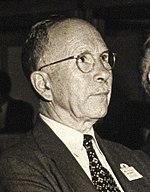

 Date of Birth: 14-Dec-1884
 Place of Birth: Benicia, California, United States
Date of Death: 28-Apr-1962
Profession: physician
Nationality: United States
Zodiac Sign: Sagittarius 
About Lewis Hackett
- Lewis Wendell Hackett (14 December 1884 - Washington, 28 April 1962) was an American physician who worked in Italy and South America to combat malaria. He graduated from Harvard Medical School in 1913.
- The following year he became part of the International Health Division of the Rockefeller Foundation, whose task was the eradication of certain diseases of particular social importance in different parts of the world.
- From 1914 to 1924 he worked in Central America.
- In 1924 he was transferred to Italy. Hackett had the opportunity to collaborate with the Italian doctor Alberto Missiroli, at the Laboratory of Public Health of Rome, who was interested in the implementation of preventive measures for malaria control based on the control of mosquitoes.
- Together with Bartholomew Gosio, he founded the School of Malariology in Nettuno.
- He began to experiment with DDT against Anopheles mosquitoes, vectors of the disease.
- In 1925, Hackett and Missiroli, with funding from the Rockefeller Foundation, started the work which led to the creation of the Istituto Superiore di Sanità. In 1940, with the outbreak of World War II, Hackett left Italy to go to South America where he remained until 1949.
- Overall, Hackett worked in seventeen countries.
- He was the first editor of the American Journal of Tropical Medicine and Hygiene when it was created in 1952 and president of the American Society of Tropical Medicine and Hygiene (ASTMH) in 1959.
Read more at Wikipedia
Image Author, Source and License
Author:
Source: Cropped from File:Swellengrebel, Shortt and Hackett. Photograph, Washington, 1 Wellcome V0028084.jpg
License: CC-BY-4.0
More Details

|
This file comes from Wellcome Images, a website operated by Wellcome Trust, a global charitable foundation based in the United Kingdom. Refer to Wellcome blog post (archive). |
Source: Cropped from File:Swellengrebel, Shortt and Hackett. Photograph, Washington, 1 Wellcome V0028084.jpg
License: CC-BY-4.0
More Details