Karol Stanisław Radziwiłł (1734–1790), Date of Birth, Place of Birth, Date of Death
TweetKarol Stanisław Radziwiłł (1734–1790)
politician (1734-1790)
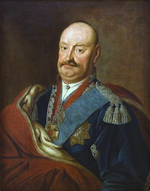

 Date of Birth: 27-Feb-1734
 Place of Birth: Nyasvizh, Minsk Region, Belarus
Date of Death: 21-Nov-1790
Profession: politician
Zodiac Sign: Pisces 
About Karol Stanisław Radziwiłł (1734–1790)
- For other people to use this name see: Karol Stanislaw Radziwill Prince Karol Stanislaw Radziwill (Belarusian: ?????? ????????? ???????? II, Lithuanian: Karolis Stanislovas Radvila II, Exonym: Charles Stanislaus: 27 February 1734 – 21 November 1790) was a Polish nobleman, politician, diplomat, prince of the Crown Kingdom of Poland and the Commonwealth, statesman of the Grand Duchy of Lithuania, Voivode of Vilnius, governor of Lwów and Sejm Marshal between 1767 and 1768.
- He is frequently referred to by his well-known idiolect "Panie Kochanku" ("My Dear Sir") to distinguish him from his earlier namesake.Prince Radziwill held several important posts in the Polish–Lithuanian Commonwealth.
- From 1752 he was the Master Swordbearer of the Grand Duchy of Lithuania.
- On 3 August 1757 he was awarded the Order of the White Eagle and was officially one of that decoration's first recipients.
- From 1762 he was Voivode of Vilnius. In 1767 he became Marshal General of the Radom Confederation and, the following year, Marshal of the Bar Confederation.
- After its fall in 1772 he emigrated, but in 1777 returned to the Polish–Lithuanian Commonwealth and resumed all his previous posts after having first pledged his loyalty to Polish King Stanislaw II Augustus, whom he had previously opposed.
- During the Great Sejm from 1788 until his death in 1790 he was a leading opponent of reform, King Stanislaw Augustus and his allies; the members of the so-called Familia political party headed by the Czartoryski family. Radziwill was the wealthiest magnate in Poland, in the second half of the 18th century, and one of the richest men in Europe.
- His private properties and wealth, including 16 cities, 683 villages and 25 counties, both in Poland and in the Grand Duchy of Lithuania, could have been compared to those of the King himself.
- Legends about him abounded, and he was featured in historical novels and poems reflecting his contributions to the nation.
- On one hand, he was pictured as a drunkard and degenerate reveler; on the other, as a flamboyant character, the best representative of Sarmatism in the country, and a great patriot who fought for a free nation, that soon after his death would be partitioned between the Habsburg Monarchy, Prussia and the Russian Empire.
- He was popular among the poorer nobility and remains today a symbol of his era.The prince owned a house on the Rue Neuve des Bons Enfants in Paris.
- The street is now called Rue Radziwill.
Read more at Wikipedia
Image Author, Source and License
Author:
Source: http://katalog.muzeum.krakow.pl/pl/work/portret-karola-radziwi%C5%82%C5%82-panie-kochanku
License: CC-PD-Mark
PD-Art (PD-old-100)
More Details
Konstanty Aleksandrowicz
(fl. 1777–1794)   |
|||
|---|---|---|---|
| Description | Polish painter and copyist | ||
| Work period | 1777–1794 | ||
| Authority control | |||
Source: http://katalog.muzeum.krakow.pl/pl/work/portret-karola-radziwi%C5%82%C5%82-panie-kochanku
License: CC-PD-Mark
PD-Art (PD-old-100)
More Details