Pervez Musharraf, Date of Birth, Place of Birth
TweetPervez Musharraf
former dictator and 10th President of Pakistan
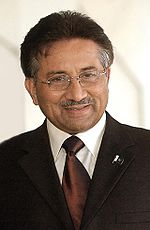

 Date of Birth: 11-Aug-1943
 Place of Birth: Delhi, India
Profession: military personnel, politician, financier
Nationality: Pakistan
Zodiac Sign: Leo 
P_Musharraf
pervezmusharraf
About Pervez Musharraf
- Pervez Musharraf (Urdu: ????? ????? Parvez Musarraf; born 11 August 1943) is a Pakistani politician and retired four-star general of the Pakistan Army, who was the 10th President of Pakistan from 2001 until tendering his resignation, to avoid impeachment, in 2008.Born in Delhi during the British Raj, Musharraf was raised in Karachi and Istanbul; he studied mathematics at Forman Christian College in Lahore and was also educated at the Royal College of Defence Studies.
- Musharraf entered the Pakistan Military Academy in 1961 and was commissioned to the Pakistan Army in 1964, playing an active role in the Afghan civil war.
- Musharraf saw action during the Indo-Pakistani War of 1965 as a second lieutenant; by the 1980s, he was commanding an artillery brigade.
- In the 1990s, Musharraf was promoted to major general and assigned an infantry division, and later commanded the Special Services Group.
- Soon after, he also served as deputy military secretary and director general of military operations.Musharraf rose to national prominence when he was promoted to four-star general by then-Prime Minister Nawaz Sharif in 1998, making Musharraf the head of the armed forces.
- He led the Kargil infiltration that almost brought India and Pakistan to a full-fledged war in 1999.
- After months of contentious relations between Sharif and Musharraf, Sharif unsuccessfully attempted to remove Musharraf as the army's leader.
- In retaliation, the army staged a coup d'état in 1999, which allowed Musharraf to take over Pakistan as President in 2001.
- He subsequently placed Sharif under strict house-arrest, before launching official criminal proceedings against him.Musharraf initially remained the Chairman of the Joint Chiefs and the Chief of the Army Staff, although, he relinquished the former position upon confirmation of his presidency.
- However, he remained the Army Chief until retiring in 2007.
- The initial stages of his presidency featured controversial wins in a state referendum to grant him a five year term limit, and a general election in 2002.
- During his presidency, he advocated for the third way, adopting a synthesis of conservatism and socialism.
- Musharraf reinstated the constitution in 2002, though it was heavily amended within the Legal Framework Order.
- He appointed Shaukat Aziz to replace Sharif in 2004, and oversaw directed policies against terrorism, becoming a key player in the American-led war on terror.Musharraf pushed for social liberalism under his enlightened moderation program and promoted economic liberalisation, while he also banned trade unions.
- Musharraf's presidency coincided with a rise of overall gross domestic product by around 50%; in the same period, domestic savings declined, and economic inequality rose at a rapid rate.
- Musharraf's government has also been accused of human rights abuses, and he survived a number of assassination attempts during his presidency.
- When Aziz departed as Prime Minister, and after approving the suspension of the judicature in 2007, Musharraf's position dramatically weakened by 2008.
- Tendering his resignation to avoid impeachment, Musharraf moved to London in self-imposed exile.
- His legacy as leader is mixed; his era saw the emergence of a more assertive middle class, but the open disregard for civilian institutions greatly weakened Pakistan.Musharraf returned to Pakistan in 2013 to participate in that year's general elections, but was disqualified from participating after the country's high courts issued arrest warrants for him and Aziz for their alleged involvement in the assassinations of Nawab Akbar Bugti and Benazir Bhutto.
- Upon Sharif's re-election in 2013, he initiated high treason charges against Musharraf for implementing emergency rule and suspending the constitution in 2007.
- The case against Musharraf continued after Sharif's removal from office in 2017; the same year in which Musharraf was declared an "absconder" in the Bhutto assassination case by virtue of moving to Dubai.
- In 2019, Musharraf was sentenced to death in absentia over his treason charges.
Read more at Wikipedia
See Also
- Famous People's Birthdays on 11 August, India
- Famous People's Birthdays in August, India
- Famous People's Birthdays on 11 August, Pakistan
- Famous People's Birthdays in August, Pakistan
- Famous military personnel's Birthdays on 11 August, India
- Famous military personnel's Birthdays in August, India
- Famous politician's Birthdays on 11 August, India
- Famous politician's Birthdays in August, India
- Famous financier's Birthdays on 11 August, India
- Famous financier's Birthdays in August, India
- Famous military personnel's Birthdays on 11 August, Pakistan
- Famous military personnel's Birthdays in August, Pakistan
- Famous politician's Birthdays on 11 August, Pakistan
- Famous politician's Birthdays in August, Pakistan
- Famous financier's Birthdays on 11 August, Pakistan
- Famous financier's Birthdays in August, Pakistan