Ara Harutyunyan, Date of Birth, Place of Birth, Date of Death
TweetAra Harutyunyan
Soviet sculptor and artist (1928-1999)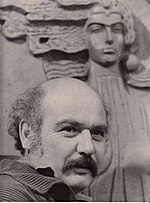

 Date of Birth:
  Place of Birth: Yerevan, Armenia
About Ara Harutyunyan
- Ara Harutyunyan (Armenian: ??? ?????????????; March 28, 1928 – February 28, 1999) was an Armenian monumental sculptor, graphic artist, People's Artist of Armenia, corresponding member of Academy of Fine Arts of USSR and Russian Academy of Arts, professor. He is the author of monumental statue "Mother Armenia" installed on the heights of Yerevan, becoming one of the most popular symbols of Armenia.
- Ara Harutyunyan revived the traditions of the medieval Armenian architectural and sculptural complex and created his own vivid style of decorative narrative relief art.
- Among them are such iconic work as the Erebuni Museum, the sculptural complex of the G.
- Sundukyan State Academic Theatre, the Sardarapat Memorial Complex and the Musa Ler monument, the reliefs of the Yerevan Vine Plant, etc.The sculptor's artistic legacy is very large, and its significance is outstanding.
- His work is notable by the variety of genres and compositions used, by its versatility and magnitude.
- Harutyunyan created more than 40 monumental and monumental-decorative works, sculptural complex in Armenia, Russia, France, Italy, Philippines and other countries, as well as reliefs, gravestones, easel sculptures, dozens of drawings and graphic works. The art scholar A.
- Kamensky says: "Harutyunyan strongly influenced today's Yerevan.
- He created its central vertical, the grand "Mother Armenia" monumental satue.
- The bas-reliefs and decorative sculptures done by the master decorate the entrance of the G.
- Sundukyan Theatre, the Erebuni Museum, the Journalists' House and other buildings.
- Their architectural and sculptural composition in many ways determines the artistic and plastic expressivity of the modern Yerevan, the language of its symbols and historical associations".
Read more at Wikipedia