Frederick Bailey Deeming, Date of Birth, Place of Birth, Date of Death
TweetFrederick Bailey Deeming
Australian murderer
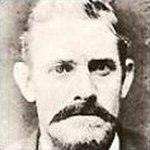

 Date of Birth: 30-Jul-1853
 Place of Birth: Ashby-de-la-Zouch, England, United Kingdom
Date of Death: 23-May-1892
Profession: serial killer
Zodiac Sign: Leo 
About Frederick Bailey Deeming
- Frederick Bailey Deeming (30 July 1853 – 23 May 1892) was an English-born Australian gasfitter and murderer.
- He was convicted and executed for the murder of a woman in Melbourne, Australia.
- He is remembered today because he was suspected by some of being the notorious serial killer, Jack the Ripper. Deeming was born in Ashby-de-la-Zouch, Leicestershire, England, son of Thomas Deeming, brazier, and his wife Ann, née Bailey.
- He was a "difficult child" according to writers Maurice Gurvich and Christopher Wray.
- At 16 years of age, he ran away to sea, and thereafter he began a long career of crime, largely thieving and obtaining money under false pretenses.
- He was also responsible for the murder of his first wife Marie and his four children at Rainhill, England, on or about 26 July 1891, and a second wife, Emily Mather, at Windsor, Melbourne, on 24 December 1891. Less than three months elapsed between the discovery of Mather's body in Windsor, Melbourne, in March 1892, and Deeming's execution for her murder in May 1892; a remarkably short time by comparison to modern western legal standards.
- This was not only due to efficient police work, but also a result of the considerable international media interest the murder attracted.
- For example, it was an English journalist working for the Melbourne Argus who first approached Mather's mother in Rainhill and delivered the news of her daughter's murder.
- Another factor was Deeming's behaviour in public, for while he often used different names, he usually drew attention to himself with behaviour variously described as aggressive, ostentatious, ingratiating and overly attentive to women.
Read more at Wikipedia