Richard Dawkins, Date of Birth, Place of Birth
TweetRichard Dawkins
English ethologist, evolutionary biologist and author
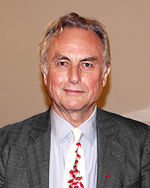

 Date of Birth: 26-Mar-1941
 Place of Birth: Nairobi, Kenya
Profession: screenwriter, actor, writer, zoologist, author, biologist, university teacher, geneticist, science writer, essayist, science communicator, epistemologist, evolutionary biologist, theoretical biologist, ethologist, sociobiologist
Nationality: United Kingdom
Zodiac Sign: Aries 
RichardDawkins
RichardDawkinsBooks
About Richard Dawkins
- Clinton Richard Dawkins, (born 26 March 1941) is an English ethologist, evolutionary biologist, and author.
- He is an emeritus fellow of New College, Oxford, and was the University of Oxford's Professor for Public Understanding of Science from 1995 until 2008. Dawkins first came to prominence with his 1976 book The Selfish Gene, which popularised the gene-centred view of evolution and introduced the term meme.
- With his book The Extended Phenotype (1982), he introduced into evolutionary biology the influential concept that the phenotypic effects of a gene are not necessarily limited to an organism's body, but can stretch far into the environment.
- In 2006, he founded the Richard Dawkins Foundation for Reason and Science. Dawkins is known as an outspoken atheist.
- He is well known for his criticism of creationism and intelligent design.
- In The Blind Watchmaker (1986), he argues against the watchmaker analogy, an argument for the existence of a supernatural creator based upon the complexity of living organisms.
- Instead, he describes evolutionary processes as analogous to a blind watchmaker, in that reproduction, mutation, and selection are unguided by any designer.
- In The God Delusion (2006), Dawkins contends that a supernatural creator almost certainly does not exist and that religious faith is a delusion. Dawkins has been awarded many prestigious academic and writing awards, and he makes regular television, radio, and Internet appearances, predominantly discussing his books, his atheism, and his ideas and opinions as a public intellectual.
Read more at Wikipedia
See Also
- Famous People's Birthdays on 26 March, Kenya
- Famous People's Birthdays in March, Kenya
- Famous People's Birthdays on 26 March, United Kingdom
- Famous People's Birthdays in March, United Kingdom
- Famous screenwriter's Birthdays on 26 March, Kenya
- Famous screenwriter's Birthdays in March, Kenya
- Famous actor's Birthdays on 26 March, Kenya
- Famous actor's Birthdays in March, Kenya
- Famous writer's Birthdays on 26 March, Kenya
- Famous writer's Birthdays in March, Kenya
- Famous zoologist's Birthdays on 26 March, Kenya
- Famous zoologist's Birthdays in March, Kenya
- Famous author's Birthdays on 26 March, Kenya
- Famous author's Birthdays in March, Kenya
- Famous biologist's Birthdays on 26 March, Kenya
- Famous biologist's Birthdays in March, Kenya
- Famous university teacher's Birthdays on 26 March, Kenya
- Famous university teacher's Birthdays in March, Kenya
Image Author, Source and License
Author:
Source: Own work
License: CC-BY-3.0
More Details
David Shankbone
(1974–)   |
|||
|---|---|---|---|
 |
|||
| Alternative names | David Miller | ||
| Description | American photographer | ||
| Date of birth | 1974 | ||
| Authority control | |||
Source: Own work
License: CC-BY-3.0
More Details