
 Date of Birth:
  Place of Birth: Riga, Latvia
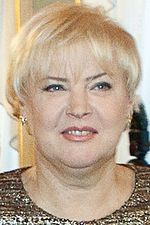
About Ingrīda Ūdre
- Ingrida Latimira, formerly Ingrida Udre, (born November 14, 1958) is a Latvian politician who belongs to the Latvian Farmers' Union political party. Udre is a former professional basketball player who worked as an accountant after the end of her basketball career.
- She was first elected to Saeima, the Latvian parliament, in 1998, from the list of the New Party.
- She was the presidential candidate of the New Party in 1999. In 2002, after the New Party ceased to exist, Udre joined the Latvian Farmers' Union and became the leader of the newly founded Union of Greens and Farmers.
- After the 2002 parliamentary election, she became Speaker of the Saeima.
- She served in this position until the 2006 election.In 2004, Udre was nominated as Latvia's candidate for European Commission.
- Her nomination caused a major controversy.
- Udre was a replacement for Latvia's previous commissioner Sandra Kalniete.
- Udre was also criticised, by Delna (the Latvian chapter of Transparency International) and other anti-corruption NGOs, for campaign finance violations committed by the Union of Farmers and Greens, although her personal involvement in those violations was never proven.
- In October 2004, Latvia withdrew Udre's candidacy, nominating Andris Piebalgs instead of her.In 2006, Udre failed to win reelection to Saeima.
- Her party, the Union of Farmers and Greens increased its number of seats in the parliament from 12 to 18.
- Udre, however, received a large number of personal "against" votes (Latvian election system allows voters to cast "for" and "against" votes for individual candidates of the party they support) and was not reelected because of that.
- This appears to be the only case in Latvian history when a political party has increased its representation but its leader was not reelected to the parliament.
Read more at Wikipedia