Peter Kosler, Date of Birth, Place of Birth, Date of Death
TweetPeter Kosler
Carniolan lawyer
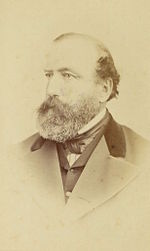

 Date of Birth: 16-Feb-1824
 Place of Birth: Kočevje Municipality, Slovenia
Date of Death: 16-Apr-1879
Profession: lawyer, politician, jurist, geographer, cartographer
Zodiac Sign: Aquarius 
About Peter Kosler
- Peter Kosler or Kozler (16 February 1824 – 16 April 1879) was a Carniolan lawyer, geographer, cartographer, activist, and manufacturer.
- He was of ethnic German origin, but also identified with Slovene culture and advocated the peaceful coexistence of the Slovene and German cultures in Carniola. Kosler was born in Koce, a village south of Kocevje in Gottschee County, in what was then the Austrian Kingdom of Illyria, and is now Slovenia.
- He is best known for creating the first map of the Slovene Lands, called Zemljovid Slovenske dežele in pokrajin (Map of Slovene Lands and Provinces).
- Made already from 1848 until the end of 1852, it was published only in 1861.
- Despite this, it had a significant impact in the time of the Slovene national awakening. Born in a relatively well-to-do family, Kosler made a fortune with beer manufacturing and was the founder of the Union Brewery.
- He gave large amounts of money to support Slovenian cultural associations and institutions.
- He was close to the conservative Old Slovene political movement. Kosler bought Cekin Mansion just outside the center of Ljubljana and renovated it in a neoclassical style.
- Today, the mansion houses the National Museum of Contemporary History.
- The Koslers also owned a mansion (Slovene: Kozlerjeva palaca) in the center of Ljubljana, close to Congress Square (Kongresni trg) and Cop Street (Copova ulica), which was regarded as one of the finest Baroque buildings in the city.
- The building was slated for demolition in 1956 and torn down by the Communist authorities in 1961 in order to widen the nearby street, which caused a public outcry and marked a milestone in the development of postwar urban development in Ljubljana.
- According to an interview with art historian Damjan Prelovšek in October 2006, trees now grow at the site of the former building, demonstrating that its demolition was a political decision and unnecessary in order to widen the street.
- Kosler also owned a plot of land in the Ljubljana Marshes known as Kosler's Thicket (Slovene: Kozlerjeva gošca).
- During World War II, the plot was used as a mass grave for victims of the Slovenian Home Guard torturer and killer Franc Frakelj. Kosler died in Ljubljana and is buried at Žale cemetery in Ljubljana.In 1999, a Slovenian postal stamp was dedicated to Kosler.
Read more at Wikipedia
See Also
- Famous People's Birthdays on 16 February, Slovenia
- Famous People's Birthdays in February, Slovenia
- Famous lawyer's Birthdays on 16 February, Slovenia
- Famous lawyer's Birthdays in February, Slovenia
- Famous politician's Birthdays on 16 February, Slovenia
- Famous politician's Birthdays in February, Slovenia
- Famous jurist's Birthdays on 16 February, Slovenia
- Famous jurist's Birthdays in February, Slovenia
- Famous geographer's Birthdays on 16 February, Slovenia
- Famous geographer's Birthdays in February, Slovenia
- Famous cartographer's Birthdays on 16 February, Slovenia
- Famous cartographer's Birthdays in February, Slovenia
Image Author, Source and License
Author:
Source:
License: CC-PD-Mark
More Details
Ludwig Angerer
(1827–1879)   |
|||
|---|---|---|---|
 |
|||
| Alternative names | Ludovít Angerer; Ludwig Angerer | ||
| Description | Austrian photographer and painter | ||
| Date of birth/death | 15 August 1827 | 12 May 1879 | |
| Location of birth/death | Malacky | Vienna | |
| Work period | (at least) 1853 - 1873 | ||
| Work location | Vienna, Bucharest | ||
| Authority control | |||
Source:
This image is available from the Digital Library of Slovenia under the reference number AE8IT9V2 This tag does not indicate the copyright status of the attached work. A normal copyright tag is still required. See Commons:Licensing for more information. |

|
License: CC-PD-Mark
More Details