Bolesław III Wrymouth, Date of Birth, Place of Birth, Date of Death
TweetBolesław III Wrymouth
duke of Poland between 1107 and 1138
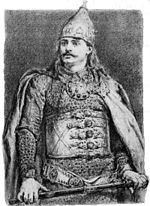

 Date of Birth: 20-Aug-1086
 Place of Birth: Kraków, Lesser Poland Voivodeship, Poland
Date of Death: 28-Oct-1138
Profession: politician
Zodiac Sign: Leo 
About Bolesław III Wrymouth
- Boleslaw III Wrymouth (also known as Boleslaus III the Wry-mouthed, Polish: Boleslaw III Krzywousty) (20 August 1086 – 28 October 1138), was a Duke of Lesser Poland, Silesia and Sandomierz between 1102 and 1107 and over the whole Poland between 1107 and 1138.
- He was the only child of Prince Wladyslaw I Herman and his first wife Judith, daughter of Vratislaus II of Bohemia. Boleslaw began to rule in the last decade of the 11th century, when the central government in Poland was significantly weakened.
- Wladyslaw I Herman fell under the political dependence of the Count palatine Sieciech, who became the real ruler of the country.
- Backed by their father, Boleslaw and his half-brother Zbigniew finally expelled Sieciech from the country in 1101, after several years of fighting.
- After the death of Wladyslaw I Herman in 1102, two independent states were created ruled by Boleslaw and Zbigniew. Boleslaw sought to gain Pomerania which caused an armed conflict between the brothers, and forced Zbigniew to flee the country and seek military help from German King Henry V.
- Boleslaw punished Zbigniew by blinding him.
- This action caused outrage among supporters of Zbigniew, resulting in a political crisis in Poland.
- Boleslaw once again gained the favor of his subjects with public penance, and made a pilgrimage to the monastery of his patron, Saint Giles, in Hungary. Boleslaw, like Boleslaw II the Generous, based his foreign policy on maintaining good relations with neighboring Hungary and Kievan Rus, with whom he forged strong links through marriage and military cooperation in order to break the political dependence on Germany and his vassal, the King of Bohemia, who in moments of weakness of Polish policy was forced to pay tribute in Silesia.
- These alliances have allowed Boleslaw to effectively defend the country from invasion in 1109.
- Several years later, Boleslaw skillfully took advantage of the dynastic disputes in Bohemia to ensure peace on the south-west border. Boleslaw devoted the second half of his rule to the conquest of Pomerania.
- In 1113 he conquered the northern strongholds along Notec, which strengthened the border with the Pomeranians.
- In subsequent years, he took steps toward the conquest of Pomerania.
- The resolution of the conflict with the Holy Roman Empire allowed Boleslaw to subordinate Western Pomerania and incorporate Gdansk Pomerania.
- The military expeditions, carried out in three stages, ended in the 1120s with military and political successes.
- Integration of the newly annexed lands enabled Boleslaw to build churches and began the process of converting Pomerania.
- Bishop Otto of Bamberg confirmed the Christianization of Pomerania from 1123 onward. In the 1130s Boleslaw participated in the dynastic dispute in Hungary.
- After an unexpected defeat, he was forced to make an agreement with Germany.
- The Congress of Merseburg of 1135 addressed the issues of Pomerania, Silesian (probably also Polish) sovereignty and the supremacy of the Archbishopric of Magdeburg over the Polish Church. Boleslaw was married twice.
- His first marriage with the Kievan princess Zbyslava gave him an excuse to intervene militarily in the internal affairs of Russia.
- After her death, Boleslaw married to a German noblewoman, Salomea of Berg, which in some way was the cause of changes in Polish foreign policy: in the second half of his rule, the Prince sought to restore diplomatic relations with his western neighbor.
- His last, and perhaps the most momentous act, was his will and testament known as "The Succession Statute" in which he divided the country among his sons, leading to almost 200 years of feudal fragmentation of the Polish Kingdom. Boleslaw III Wrymouth has been recognized by historiography as a symbol of Polish political aspirations until well into the 19th century.
- He also upheld the independence of the Polish archbishopric of Gniezno, despite a temporary failure in the 1130s.
- Despite undoubted successes, he committed serious political errors, most notably against Zbigniew of Poland, his half-brother.
- The crime against Zbigniew and his penance for it show Boleslaw's great ambition as well as his ability to find political compromise.
Read more at Wikipedia
Image Author, Source and License
Author:
Source: Gazeta.pl Historia
License: CC-PD-Mark
PD-Art (PD-old-100)
More Details
Jan Matejko
(1838–1893)    |
|||
|---|---|---|---|
 |
|||
| Alternative names | Jan Alojzy Matejko; Johann Matejko; Jana Matejki; j. matejko; jan matejko; J. Mateijko; Matejko | ||
| Description | Polish-Austro-Hungarian painter and university teacher | ||
| Date of birth/death | 24 June 1838 | 1 November 1893 | |
| Location of birth/death | Kraków | Kraków | |
| Work location | Vienna; Paris; Munich | ||
| Authority control | |||
Source: Gazeta.pl Historia
License: CC-PD-Mark
PD-Art (PD-old-100)
More Details