Ernest Oberholtzer, Date of Birth, Place of Birth, Date of Death
TweetErnest Oberholtzer
Explorer, author and conservationist
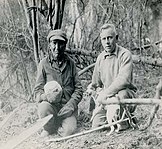

 Date of Birth: 06-Feb-1884
 Place of Birth: Davenport, Iowa, United States
Date of Death: 06-Jun-1977
Profession: conservationist
Zodiac Sign: Aquarius 
About Ernest Oberholtzer
- Ernest Carl Oberholtzer (February 6, 1884 – June 6, 1977) was an American explorer, author, and conservationist. Nicknamed "Ober", he was born and raised in Davenport, Iowa, but he lived most of his adult life in Minnesota.
- Oberholtzer attended Harvard University and received a bachelor of arts degree, but left after one year of graduate study in landscape architecture.
- He made his first trip to the Minnesota-Ontario border lakes in 1906. In 1909 he took his first extended canoe voyage through the border lakes and the Rainy Lake watershed, traveling 3,000 miles that summer.
- During the period from 1908 to 1915, Oberholtzer wrote a number of articles and short stories, some under the penname Ernest Carliowa.
- Many of the stories and articles were based on his canoe trip experiences.
- In 1913, Oberholtzer moved to Rainy Lake.
- He purchased Mallard Island in 1922; the tiny island would be his home for more than 50 years. After plans were announced by business mogul Edward Backus to construct a series of dams to harness the Rainy Lake watershed for power generation, Oberholtzer spoke in opposition at a hearing of the International Joint Commission held at International Falls in September 1925.
- As a result of meetings with Minneapolis businessmen who were similarly opposed to industrialization of the area, the Quetico-Superior Council was formed in 1928.
- Oberholtzer served as its first president.
- His activities for the council included lobbying United States Congress and the Minnesota legislature, testifying before the International Joint Commission and building public support for the council's program.
- In 1934, President Franklin D.
- Roosevelt created the President's Quetico-Superior Committee to advise and coordinate government activity concerning the Quetico-Superior area.
- Oberholtzer was its first chairman, and served as a member until 1968. Oberholtzer was one of the eight founding members of The Wilderness Society and served on its executive council from 1937 until 1967.
- His addition to The Wilderness Society lent national stature to the group.
- In addition to his wilderness campaigning, he spoke fluent Ojibwe and was a fervent student of their culture.
- He never married and died in 1977 after a long period of ill health. Oberholtzer is recognized today as a leading advocate for the preservation of the Quetico-Superior lake area, as well as an advocate of the Native American culture in that region.
- The Minneapolis Star Tribune selected Oberholtzer as one of the 100 Most Influential Minnesotans of the 20th century.
Read more at Wikipedia