George Elliot (Royal Navy officer, born 1784), Date of Birth, Date of Death
TweetGeorge Elliot (Royal Navy officer, born 1784)
Royal Navy officer during the French Revolutionary Wars and Napoleonic Wars.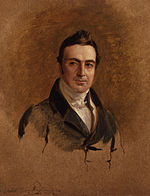

 Date of Birth:
About George Elliot (Royal Navy officer, born 1784)
- Admiral Sir George Elliot (1 August 1784 – 24 June 1863) was a Royal Navy officer who served during the French Revolutionary and Napoleonic Wars, and the First Opium War. Elliot was born to influential and distinguished family that included several powerful politicians and diplomats.
- After entering the navy at an early age he served through several of the decisive battles of the French Revolutionary Wars, seeing action at Genoa, Hyères, and Cape St Vincent and under Nelson at the Nile and Copenhagen.
- He had graduated to his own commands by the outbreak of the Napoleonic Wars, being described by Nelson as one of the best officers in the navy, and served with distinction in the Mediterranean and in the East Indies, where he took part in the Invasion of Java.
- Left without significant employment after the end of the wars with France, Elliot took up politics, with the support of the Duke of Clarence and his relatives already in government office. Elliot briefly represented Roxburghshire in Parliament, and served as Secretary to the Admiralty and later one of the Lords Commissioners of the Admiralty.
- He briefly returned to active naval service with his elevation to flag rank, and commanded the station at the Cape of Good Hope.
- He went out to superintend operations in China during the First Opium War, but failed to make any decisive difference, and returned to Britain.
- Here he found factional politics had reduced his and his relations' former influence in government, and he thereafter only served in a minor capacity in the navy, and did not return to government office.
- He died in 1863, having risen by seniority to the rank of admiral, fathered a large family which included high-ranking military officers, and their spouses, and having made a distinct contribution to naval policy during his time in politics.
Read more at Wikipedia
Image Author, Source and License
Author:
Source:
License: CC-PD-Mark
PD-Art (PD-old-100)
More Details
George Hayter
(1792–1871)   |
|||
|---|---|---|---|
 |
|||
| Description | British painter and printmaker | ||
| Date of birth/death | 17 December 1792 | 18 January 1871 | |
| Location of birth/death | London | London | |
| Work location | London | ||
| Authority control | |||
Source:
National Portrait Gallery: NPG 2511

|
While Commons policy accepts the use of this media, one or more third parties have made copyright claims against Wikimedia Commons in relation to the work from which this is sourced or a purely mechanical reproduction thereof. This may be due to recognition of the "sweat of the brow" doctrine, allowing works to be eligible for protection through skill and labour, and not purely by originality as is the case in the United States (where this website is hosted). These claims may or may not be valid in all jurisdictions.
As such, use of this image in the jurisdiction of the claimant or other countries may be regarded as copyright infringement. Please see Commons:When to use the PD-Art tag for more information. See User:Dcoetzee/NPG legal threat for original threat and National Portrait Gallery and Wikimedia Foundation copyright dispute for more information. This tag does not indicate the copyright status of the attached work. A normal copyright tag is still required. See Commons:Licensing. |
License: CC-PD-Mark
PD-Art (PD-old-100)
More Details