John Struthers (anatomist), Date of Birth, Place of Birth, Date of Death
TweetJohn Struthers (anatomist)
Regius Professor of Anatomy at the University of Aberdeen
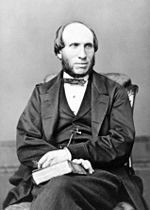

 Date of Birth: 21-Feb-1823
 Place of Birth: Dunfermline, Scotland, United Kingdom
Date of Death: 24-Feb-1899
Profession: surgeon, anatomist, cetologist
Zodiac Sign: Pisces 
About John Struthers (anatomist)
- Sir John Struthers MD PRCSE FRSE ((1823-02-21)21 February 1823 – (1899-02-24)24 February 1899) was the first Regius Professor of Anatomy at the University of Aberdeen.
- He was a dynamic teacher and administrator, transforming the status of the institutions in which he worked.
- He was equally passionate about anatomy, enthusiastically seeking out and dissecting the largest and finest specimens, including whales, and troubling his colleagues with his single-minded quest for money and space for his collection.
- His collection was donated to the Surgeon's Hall in Edinburgh.Among scientists, he is perhaps best known for his work on the ligament which bears his name.
- His work on the rare and vestigial ligament of Struthers came to the attention of Charles Darwin, who used it in his Descent of Man to help argue the case that man and other mammals shared a common ancestor. Among the public, Struthers was famous for his dissection of the "Tay Whale", a humpback whale that appeared in the Firth of Tay, was hunted and then dragged ashore to be exhibited across Britain.
- Struthers took every opportunity he could to dissect it and recover its bones, and eventually wrote a monograph on it. In the medical profession, he was known for transforming the teaching of anatomy, for the papers and books that he wrote, as well as for his efficient work in his medical school, for which he was successively awarded medicine's highest honours, including membership of the General Medical Council, fellowship of the Royal Society of Edinburgh, the presidency of the Royal College of Surgeons of Edinburgh, and finally a knighthood.
Read more at Wikipedia
See Also
- Famous People's Birthdays on 21 February, United Kingdom
- Famous People's Birthdays in February, United Kingdom
- Famous surgeon's Birthdays on 21 February, United Kingdom
- Famous surgeon's Birthdays in February, United Kingdom
- Famous anatomist's Birthdays on 21 February, United Kingdom
- Famous anatomist's Birthdays in February, United Kingdom
- Famous cetologist's Birthdays on 21 February, United Kingdom
- Famous cetologist's Birthdays in February, United Kingdom